012 – Gas Subsidies Ignite Rage In Iran

 Comments Off on 012 – Gas Subsidies Ignite Rage In Iran
Jul 052007
 

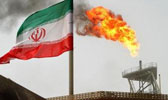
Iranian Gas 

We continue our examination of economic interventions and their unintended consequences, beginning with Iran’s fuel crisis. Despite being the world’s fourth-largest oil exporter, Iran imposes gasoline rationing because decades of subsidies have distorted markets, discouraged domestic refining, and fueled massive imports. When authorities recently raised prices and limited supply, citizens responded by setting gas stations ablaze—an entirely predictable reaction to artificial scarcity created by government controls. We warned months ago that similar price-notification schemes would provoke panic buying; Iran’s experience confirms that intervening in markets only exacerbates shortages and unrest.

We also highlight former chess champion Gary Kasparov’s warnings about Vladimir Putin. Kasparov rightly observes that Western leaders grant democratic legitimacy to authoritarian regimes through incremental concessions. True freedom erodes step by step, just as it does when citizens accept minor encroachments on their rights.

Closer to home, we scrutinize Ontario’s upcoming referendum on electoral reform. The proposed mixed-member proportional system promises “fairer” results and greater choice, yet it merely dilutes individual votes by introducing party lists and expanding the legislature. Citizens trade direct influence over local representatives for partial sway over appointed list members—a classic shell game that weakens accountability while entrenching party power.

Finally, we reflect on the deeper peril of government “doing good.” As Isabel Paterson observed, most harm arises from well-intentioned people pursuing virtuous ends through coercive means. Genuine charity requires voluntary action; when government confiscates resources to redistribute them, it replaces benevolence with force, impoverishing both donor and recipient.

These examples demonstrate why individual freedom and market principles remain essential for prosperity and justice—a perspective that is just right.

Transcript

011 – Junk Science Kills Conservatism

 Comments Off on 011 – Junk Science Kills Conservatism
Jun 282007
 

Global Warming


We delve into the pervasive clutter that fills our minds today—junk science and junk politics—drawing from recent discussions and insights that challenge the status quo. Following up on our previous guests, such as Anthony Verberkmos from Indy Media, we examine how anti-globalism and anti-war sentiments often align with the mainstream rather than true radicalism, revealing biases against America and Israel that ignore moral distinctions in conflicts. We highlight articles from the London Free Press, where Licia Corbella praises Israel as a beacon in the Middle East, and Michael Coren exposes the fault lines in blaming the West for Palestinian ills.

Turning to history, we explore how right makes might, as exemplified by the Roman Republic’s principles of representation and voluntary contributions that built its empire, contrasting with today’s moral relativism. We also address Ontario’s coal-fired plants, noting Tom Harris‘s warnings against Premier Dalton McGuinty’s closure plans, as government data shows air pollutants declining while ozone remains steady—proving coal can be clean and efficient.

The death of conservatism looms large, with columnists like Ian Urquhart and Andrew Coyne critiquing John Tory’s vague platform that mirrors liberal spending without real cuts. We recall Ayn Rand‘s 1960 obituary for conservatism, which dares not defend capitalism, the true system empowering individuals over politicians.

In our focus on junk science, we feature Terence Corcoran‘s anecdotes from Junk Science Week, debunking distorted studies and exaggerated risks. Timothy Patterson‘s research on sunspots correlates with climate cycles, showing the sun brighter now than in 8,000 years, shattering CO2 myths. Václav Klaus urges resistance to environmental hysteria that threatens freedom through global planning.

As we confront these deceptions, we advocate for objective truth in a way that is just right.

Clips & Credits

010 – Anti-idling / Freedom and risk / War – What is it good for? | Anthony Verberkmoes

 Comments Off on 010 – Anti-idling / Freedom and risk / War – What is it good for? | Anthony Verberkmoes
Jun 212007
 

War


In this edition of Just Right, we delved into the perennial surrender of freedom in exchange for an illusion of security, exposing how easily people trade their liberties for empty promises of safety. From London’s absurd anti-idling bylaws—designed to “educate” drivers with fines while exempting the very conditions where pollution matters most—to Canada’s no-fly list and post-9/11 restrictions that inconvenience innocents while achieving little against real threats, the pattern is clear: government overreach thrives on misplaced fears and misjudged risks.

We then turned to the Ontario provincial election circus, where Liberals and Progressive Conservatives alike peddle massive spending sprees—subsidies for “energy-efficient big cars,” billions for transit boondoggles, and John Tory’s push to fund religious schools at taxpayer expense—all while robbing Peter to pay Paul under the guise of compassion and progress. Add in school boards conjuring surpluses through creative accounting to avoid accountability for declining enrollments, and the fiscal irresponsibility becomes undeniable.

Guest Anthony Verberckmoes of Indymedia joined us to promote the Regional Social Forum, sparking a spirited debate on war, terrorism, and Western interventions in Afghanistan and Iraq—where one side sees self-defense against tyrannical regimes, and the other views imperial hypocrisy driven by oil and power.

Understanding these connections between personal freedom, government intrusion, electoral vote-buying, and the justifications for war is Just Right.

009 – Lost / Unions / Global warming and the carbon market / Sicko

 Comments Off on 009 – Lost / Unions / Global warming and the carbon market / Sicko
Jun 142007
 

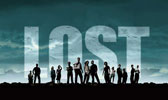
Lost


We delve into the enigmatic world of the TV series Lost, proposing that it transcends linear storytelling and serves as an allegory for group therapy in a psychiatric setting. The island symbolizes an institution where troubled characters confront their inner demons, with “the others” representing doctors and administrators, and deaths signifying cures. This interpretation explains the show’s mysteries, from the black smoke as encroaching reality to flashbacks revealing real-life traumas, and it highlights a shift in television toward thought-provoking narratives that challenge viewers.

Shifting focus, we examine Canada’s manufacturing woes amid global trade pressures from the US, Japan, and South Korea. Union demands and high labor costs—$75 per hour for Big Three autoworkers versus $45 for Toyota—undermine competitiveness, as evidenced by Ford’s recent quality wins in JD Power ratings failing to offset these disparities. Strikingly, from 1996 to 2005, Canada lost 208 days to labor disputes per metric, far exceeding OECD and UK averages, deterring investment. The rising Canadian dollar, fueled by US war expenditures, exacerbates this, while government hybrid incentives spark counterproductive rebates from competitors like Honda. Environmental regulations, high insurance, gas prices, and Ontario’s minimum wage hikes to $10.25 further strain the sector.

In education, Thames Valley School Board’s $9 million shortfall from declining enrollment underscores monopoly inefficiencies, where 80% of costs are salaries yet crises persist regardless of student numbers. We touch on the University Students’ Council’s new ethics codes post-spoof controversy, a lesson in humor’s absence, and Europe’s carbon markets, where free permits yield utility profits but burden consumers—another green tax scheme.

Finally, we critique Michael Moore‘s Sicko, which ignores Canada’s doctor shortages and champions socialized medicine that demands police-state controls to function, enslaving professionals while fostering a “me, me, me” blame game. True care thrives in markets, not monopolies. As always, pursuing freedom and reason keeps everything just right.

008 – Ontario election / G8 Summit / Health care / Wealth and poverty

 Comments Off on 008 – Ontario election / G8 Summit / Health care / Wealth and poverty
Jun 072007
 

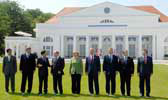
G8 Summit


We observe once again how the political landscape in Ontario offers voters little more than a choice among varying degrees of statism, as the unofficial election campaign begins with Dalton McGuinty proroguing the legislature early. Parties compete not on principles of individual freedom, but on promises to expand government control over our lives and wallets—outbidding each other on subsidies, environmental mandates, and monopolies in essential services.

We note the irony: it is often the so-called conservatives who enact the most enduring leftist policies, from income taxes to health care monopolies and rent controls. True freedom requires protecting both personal and economic rights, yet no major party advocates this consistent principle. Instead, we see pragmatists in power pursuing control for its own sake, while restricting freedoms leads inevitably to less prosperity and greater tyranny.

Globalism, properly understood, means voluntary cooperation and free trade among nations, not centralized control or anti-capitalist protests at summits like the ongoing G8. Health care remains a sacred cow of statism: a government monopoly that rations care, drives patients abroad, and bans private alternatives—unique to Ontario among Western jurisdictions. Choice and competition, not compulsion, would ensure better access and quality for all.

Finally, the perennial envy of wealth ignores how capitalism creates abundance for everyone, while socialism merely redistributes poverty. The rich deserve their earnings when gained through voluntary trade, not confiscation. In all these issues, the solution remains the recognition of individual rights and free markets—just right.

007 – John Thompson: President of The Mackenzie Institute

 Comments Off on 007 – John Thompson: President of The Mackenzie Institute
May 312007
 

John Thompson


In this edition of Just Right, we explore the stark realities of the global jihad movement with John Thompson, president of the Mackenzie Institute and a leading expert on terrorism and political extremism.

We begin by addressing Canadian attitudes toward the missions in Afghanistan and Iraq. Many Canadians view these conflicts as separate and mistaken endeavors, with polls indicating growing fatigue and a belief that continued involvement heightens vulnerability to terrorism. Yet Thompson clarifies that these are not isolated wars but manifestations of a singular worldwide phenomenon: the international jihad, encompassing Wahhabi, Salafist, Deobandist, and Khomeinist strands united by shared ideology, funding, training, and objectives.

This is no mere opinion but the jihadists’ own perspective, as they shift resources across theaters—from Iraq to Afghanistan, importing fighters from distant nations. Absent a central figure like Hitler or Stalin, the movement persists as a decades-long ideological brew, rendering quick withdrawal impossible.

We examine terrorism’s psychological underpinnings: beyond grand ideological promises of triumph, terrorists derive subconscious satisfaction from destruction and chaos. Thompson contrasts this with past Marxist terrorism, limited in lethality, against today’s far more sinister threats, including cults like Aum Shinrikyo.

In Iraq, failures stem from ignoring tribalism, debaathification errors that dismantled institutions, and external interference fueling sectarian violence. We discuss whether involvement concerns oil—Thompson asserts no, emphasizing the region’s strategic crossroads status. American imperialism proves inept at cloning democratic institutions abroad, rooted in cultural differences.

Freedom emerges as the West’s ultimate weapon against fundamentalism, though Arab elites fear its implications. Media polarization and manipulated controversies, like the Danish cartoons, divert and inflame.

Ultimately, muddling through offers the least catastrophic path, hoping moderate Muslims reclaim their faith—yet victory for jihadists would unleash unimaginable horrors.

Recognizing this global struggle for what it is remains just right.

006 – Gas prices / Afghan war / Monarchy / Environmentalism

 Comments Off on 006 – Gas prices / Afghan war / Monarchy / Environmentalism
May 242007
 

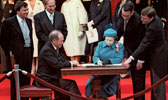
Queen signs Constitution


On this broadcast of Just Right, we addressed several pressing issues that continue to reflect fundamental principles of economics, politics, and philosophy. We began with the perennial complaints about rising gas prices, exposing the hypocrisy of politicians who decry high prices while simultaneously advocating policies to reduce consumption. As we explained, prices reflect the immutable law of supply and demand—a natural equilibrium that politicians like Liberal MP Dan McTeague and Progressive Conservative proposals foolishly seek to manipulate through increased regulation or advance notice requirements. Such interventions only lead to shortages, rationing, and further distortions of the market.

We then turned to Canada’s mission in Afghanistan, supporting Prime Minister Harper’s commitment despite public weariness fueled by media narratives. With relatively low casualties compared to everyday risks at home, we argued that abandoning the mission prematurely would constitute defeat. Negotiating with the Taliban, as suggested by some, is absurd given their ideological intransigence.

The date also prompted reflection on our constitutional monarchy. Far from irrelevant, we contended that this institution, evolved since the Magna Carta, serves as a bulwark limiting government power and preserving individual rights—a superior safeguard compared to republics that too easily devolve into unchecked statism.

Finally, we delved deeply into the environmentalist movement, reading an prescient 1969 essay by Ayn Rand that unmasks its anti-industrial, anti-human essence. Environmentalism, we demonstrated, is not about genuine pollution control (a technological issue) but about imposing collectivist dictatorship under the guise of ecological crusade. A caller’s passionate defense of balance with nature highlighted the spiritual underpinnings of this ideology, yet underscored how it often justifies coercing others.

These discussions reaffirm that true progress lies in defending individual freedom and reason against collectivist assaults. Awareness of these connections is just right.