The Trump Corollary: “My Own Morality, My Own Mind”

 Audio, Foreign Relations, Governance, Latest, Law, Military, Politics, Terrorism, Video  Comments Off on The Trump Corollary: “My Own Morality, My Own Mind”
Jan 132026
 

In the wake of the United States’ military operation in Venezuela—including the abduction of the murderous, communist, dictator Nicolás Maduro—Professor Salim Mansur of Western University and Robert Vaughan examine the profound ramifications. Domestically, the action raises serious questions about the U.S. Constitution, as only Congress holds the authority to declare war. Internationally, it appears to contravene established norms of international law.

Although the Trump administration’s conduct violated constitutional principles in principle, such actions are far from unprecedented. Every U.S. president since the end of World War II has engaged in military interventions without formal congressional declarations of war. Similarly, on the global stage, violations of international law by permanent members of the UN Security Council—endowed with veto power—have occurred repeatedly without effective consequences.

Our conversation underscores a troubling reality: the United States, often regarded as exceptional by various measures, operates beyond meaningful constraints of international law due to its veto in the Security Council. Likewise, the president appears increasingly unbound by the Constitution, given historical precedent and Congress’s consistent failure to assert its authority—often through tacit bipartisan acquiescence.

Both the U.S. Constitution and the United Nations framework have proven impotent when confronted with a president acting unilaterally in what he deems the best interest of American citizens.

In a recent interview with The New York Times, President Trump was asked whether any checks existed on his power on the world stage. He replied: “Yeah, there is one thing. My own morality. My own mind. It’s the only thing that can stop (me).” When pressed on international law, he added, “I don’t need international law. I’m not looking to hurt people.”

Some may view this stance as echoing President Truman’s famous motto, “The buck stops here”—an assertion of personal responsibility. Others, however, may interpret it as monarchical in character. As Salim noted in our conversation, “Donald Trump is not following in the footsteps of George Washington. Donald Trump is now the George III of America.”

History since World War II demonstrates that U.S. presidents have proven largely unstoppable in such matters, with American forces overwhelmingly dominant. As Salim also observes, “The cost of enforcement can only lead to further conflict—a conflict, especially in the age of nuclear weapons, that nobody can say how it will end.”
Transcript Donate

Neoconservatism Part III — America Betrayed

 Foreign Relations, Globalism, Latest, Military, Politics, Video  Comments Off on Neoconservatism Part III — America Betrayed
May 072025


In the third installment of our discussion on neoconservatism, Professor Salim Mansur examines the post-Soviet era, a period marked by complex dynamics and post-Cold War tensions. Rather than embracing Russia as a potential ally and a nascent democracy recovering from decades of communism and autocratic rule, the United States eventually came to cast it as a new “monster to destroy.”

This shift undermined America’s founding principle of rational isolationism with limited international engagement as it sought to maintain hegemony in an emerging multipolar world. The pivot fueled hostility both domestically and internationally, channeling billions into the military-industrial complex and perpetuating endless conflict.

Central to this narrative is the unwavering defense of Israel, which, alongside the focus on Russia, shapes American foreign policy. Crafted by neoconservatives and embraced by hawks across administrations since George H. W. Bush, this dual focus has defined U.S. global strategy. The neoconservative agenda, explicitly outlined in the Project for the New American Century (1997), drove NATO expansion and heightened tensions in the Middle East.

Ultimately, neoconservatism has betrayed America’s early ideals, costing countless lives, squandering vast fortunes, and tarnishing the reputation of a once-great nation.

(This video presentation is also available on YouTube.)

If you enjoyed this presentation please consider offering your financial support:
🧡 PayPal

Feb 112024
 

When the International Court of Justice (ICJ) announced that it found it “plausible” that Israel is violating the Convention on the Prevention and Punishment of the Crime of Genocide, many immediately drew parallels to the Holocaust, suggesting that Israel’s actions were akin to the treatment of Jews under Nazi Germany.

However, this interpretation is not accurate. The common understanding of “genocide” as the “systematic extermination” of a group of people does not align with the definition in the UN’s Convention, nor is it the definition under scrutiny by the ICJ.

In UN law, “genocide” encompasses a broad range of actions, including killing any number of people in a defined group, even a single person, or causing serious mental harm to a member of the group. This expansive definition implies that nations involved in any conflict, anywhere, at any time could potentially face allegations of “genocide.”

Professor Salim Mansur from Western University joins us to explore the implications of the ICJ’s provisional decision and its potential impact on the very existence of the state of Israel.

If you found this presentation valuable please consider making a donation:
🧡 PayPal

Anti-Semitism—The origins of an ancient hatred | Irving Weisdorf

 Audio, Culture, Latest, Military, Politics, Religion, Society, Terrorism  Comments Off on Anti-Semitism—The origins of an ancient hatred | Irving Weisdorf
Dec 282023
 

The Oct 7th, 2023 atrocities committed on Israeli civilians by Gaza’s Islamic Resistance Movement (Hamas) prompted widespread expression of sympathy towards the people of Israel. However, as Israel responded to this act of terrorism to bring Hamas and its supporters to justice, the narrative quickly shifted to a surge of anti-Semitism.

In a candid conversation, Jewish-Canadian businessman Irving Weisdorf and Robert Vaughan delve into the origins of anti-Semitism, the historical context leading to the establishment of the state of Israel, and the complex dynamics of the insatiable animosity held by many Arab Palestinians towards their Jewish neighbours.

Your donations are greatly appreciated and are what makes our programming possible:
🧡 PayPal

Nov 222023
 

Bin Laden

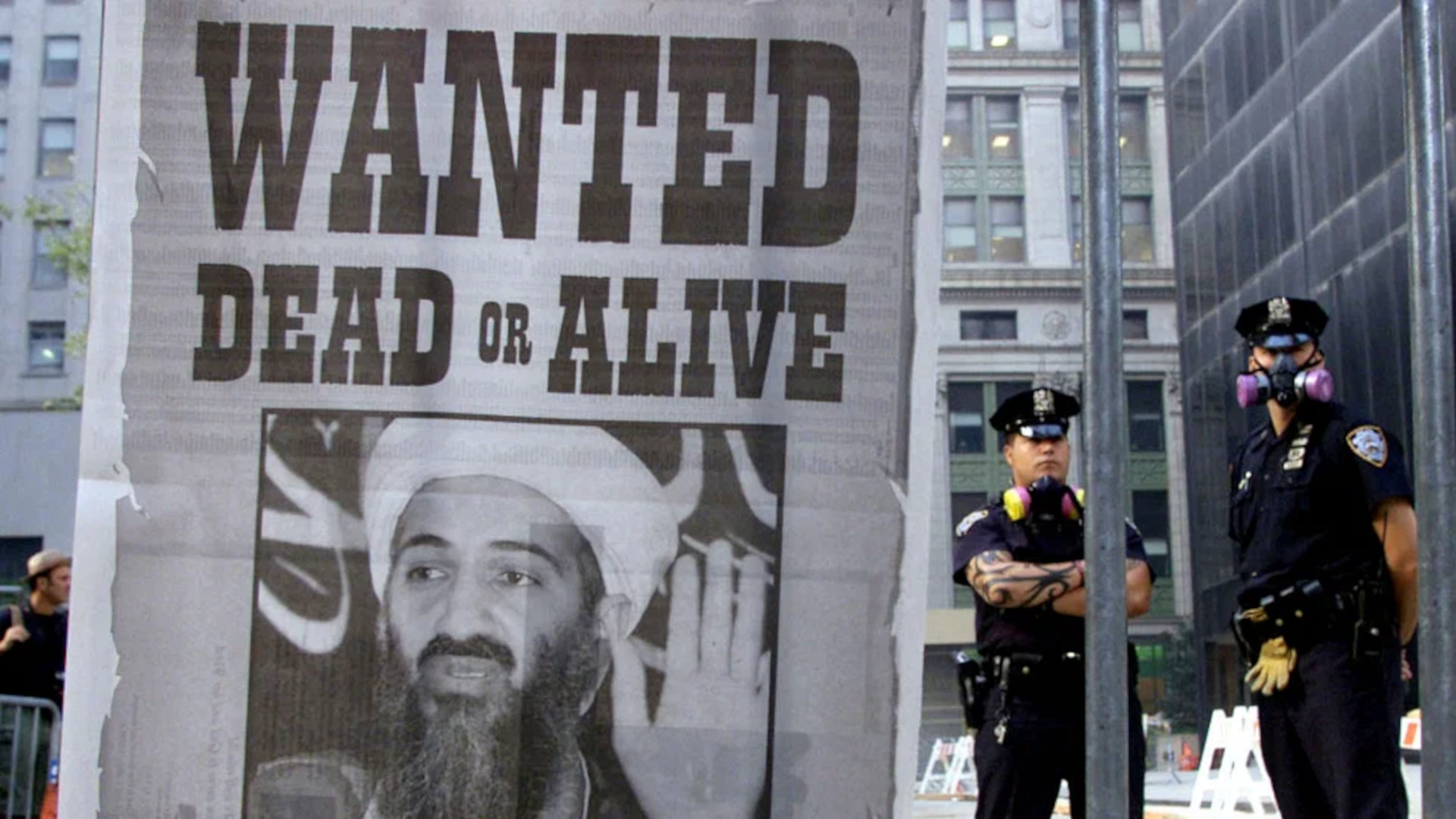
Following the Oct 7th Hamas Massacre in Israel, there has been an increase in awareness among many young people about Osama bin Laden’s “Letter to America,” a manifesto which was published 14 months after the 9/11 attacks on America.

Most of these young individuals were too young to recall the events of that day, which occurred 22 years ago. Indeed, many were not even born. In a sense, they might be forgiven for their ignorance of Bin Laden’s encyclical and the surrounding causes and effects of Al Qaeda’s actions. However, upon learning about why bin Laden killed almost 3,000 civilians, it should be clear to most with a conscience, that there is no justification for his heinous deeds.

In his lengthy missive, Bin Laden addresses two main questions: why he attacked and what he expects Americans to do in response. He claims that America attacked first, referring to the United States’ ongoing military engagements—the so-called Forever War. This constant interference in the affairs of other nations, unrelated to America’s existential concerns, serves primarily to sustain the Military Industrial Complex. For those shocked by the revelations on platforms like TikTok, this should serve as a wake-up call.

Bin Laden’s answer to the second question is straightforward: submit to Islam or face death. In this episode, we delve into the perplexing reactions of young Americans who are only now awakening to history and discovering the malevolence within the minds of Islamists willing to kill men, women, and children for their beliefs. As Bin Laden chillingly stated, “(We) desire death more than you desire life.

This chilling admission from a mass murderer in his Ex Post Facto Manifesto is no different from the manifestos left behind by others seeking redress for perceived wrongs through violence.

If you found this presentation valuable please consider supporting us:
🧡 PayPal

832 – Perpetual wars—perpetual denials

 Comments Off on 832 – Perpetual wars—perpetual denials
Oct 122023


“The war is not meant to be won, it is meant to be continuous.” – George Orwell

Over the past week, the world’s attention has been shifted from the “war” in Ukraine to a “war” in Israel. In a matter of days, everyone’s attention shifted from the previous week’s frenzy about Canada, Russia, Ukraine and the Nazis in our midst (including Jewish Nazis), to yet another event calculated to engender global sympathy for Israel and the Jewish people.

What is happening in Israel today is directly connected to events in Ukraine; any attempt to isolate one event from the other is to fail to understand that World War III is already well under way.

“Distant history will view all of these wars as nuances, concluding that Wars I, II, and III were really one catastrophic conflict with time out for rearmament and recruitment,” suggests Bill Whittle in his recent review of wars past and present.

War is not the greatest evil to fear. It is the condition of tyranny that results when collectivism rules instead of individualism, which has been the default condition under which most of humanity has lived since the beginning of recorded history.

It is a sad reality of history that the number of people killed in wars fought against foreign enemies is utterly dwarfed when compared to the number of people killed, murdered, and enslaved by their own rulers and governments. In this context, wars are mere flash points of a given tyranny running into resistance, more often from another tyranny than from any popular or democratic resistance. Hence, perpetual wars.

In the Western nations, tyrannies have been hastened with the consent of the people, a consent that does not necessarily mean agreement or support – just cooperation and compliance.

Too many have failed to resist or to speak out against a growing tyranny when the opportunity still exists. In the classic “I see nothing – I hear nothing – I know nothing” expression of denial popularized in the 1960s television series Hogan’s Heroes, most “say nothing” – even in the face of outrageous injustices and horrors.

Despite this, governments are doing all they can to silence the few voices that dare to speak out in an effort to prevent those voices from being heard by others. The antidote to tyranny, and therefore to war, is to ensure that a critical mass of people “see something, hear something, and know something” that is Just Right – and then act accordingly.

If you found this presentation valuable please consider supporting us:
🧡 PayPal

827 – At the tipping point—toward the rise or fall of America

 Comments Off on 827 – At the tipping point—toward the rise or fall of America
Sep 072023


There is a growing chorus of voices throughout the social media community that is warning of an imminent collapse of Western civilization.

Given the dystopian zeitgeist, it is difficult to avoid such a conclusion. We appear to have reached a tipping point, where open discussion is taking place about the probability of an assassination attempt on Donald Trump, the probability of a nuclear exchange between America and Russia, and the probability of censorship on a scale unprecedented.

Among the dystopian predictions is one concerning a “cyber attack,” including a complete shut down of the internet. This has sparked a discussion about the need for a return to “offline” media, including AM radio and short wave broadcasting.

“The future is offline,” recently predicted Dr. Shiva Ayyadurai – a significant prediction given that it was made by a U.S. presidential candidate and inventor of e-mail.

But the predictions are not all apocalyptic. Some hold promise, especially if considered “conspiracy theories” by the Left and the deep state. Most glaringly, the Left’s obsession with “Qanon” tempts us to comment “Methinks they doth protest too much…”

Meanwhile, General Michael Flynn has warned of a potential cyber attack, explaining how truly vulnerable the web is, and how easily the government can control it. For those seeking the facts and truth during such an event, access to alternative means of communication like short wave is among the recommended options.

Predicting which of the many apocalyptic predictions will prove to be Just Right is never a certainty, but it’s worth knowing that some predictions paint a future that is not dark, but bright.

If you found this presentation valuable please consider supporting us:
🧡 PayPal