Ayn Rand, Isabel Paterson, Leonard Peikoff – On The Nature And Purpose Of Government
The Playboy Philosophy – Freedom, Capitalism, Reason, Consent
Playboy’s Hugh Hefner On Politics, Religion, Sex
Is It Justice? Prince Of Pot Marc Emery Awaits Extradition
Board Of Control – No Longer Controlled By Voters
Just Academic? – Feminism Vs Academia
Save Local TV – Abolish The C.R.T.C.
Ayn Rand’s Atlas Shrugged – Prophesy? Or Simply Causality?
General Motors And Chrysler – Socialism, Pensions And Government
Communists On London City Council – In Denial
London’s Board Of Control – You Can’t Change The Rules After You’ve Played The Game
What About Democracy? City Hall Communists Say: “Take Four Votes Away. That’s Democratic.”
Check You Local Dictionary – There Is No Difference Between Socialism And Communism
Comments Off on 012 – Gas Subsidies Ignite Rage In Iran
Jul052007
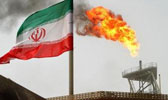
We continue our examination of economic interventions and their unintended consequences, beginning with Iran’s fuel crisis. Despite being the world’s fourth-largest oil exporter, Iran imposes gasoline rationing because decades of subsidies have distorted markets, discouraged domestic refining, and fueled massive imports. When authorities recently raised prices and limited supply, citizens responded by setting gas stations ablaze—an entirely predictable reaction to artificial scarcity created by government controls. We warned months ago that similar price-notification schemes would provoke panic buying; Iran’s experience confirms that intervening in markets only exacerbates shortages and unrest.
We also highlight former chess champion Gary Kasparov’s warnings about Vladimir Putin. Kasparov rightly observes that Western leaders grant democratic legitimacy to authoritarian regimes through incremental concessions. True freedom erodes step by step, just as it does when citizens accept minor encroachments on their rights.
Closer to home, we scrutinize Ontario’s upcoming referendum on electoral reform. The proposed mixed-member proportional system promises “fairer” results and greater choice, yet it merely dilutes individual votes by introducing party lists and expanding the legislature. Citizens trade direct influence over local representatives for partial sway over appointed list members—a classic shell game that weakens accountability while entrenching party power.
Finally, we reflect on the deeper peril of government “doing good.” As Isabel Paterson observed, most harm arises from well-intentioned people pursuing virtuous ends through coercive means. Genuine charity requires voluntary action; when government confiscates resources to redistribute them, it replaces benevolence with force, impoverishing both donor and recipient.
These examples demonstrate why individual freedom and market principles remain essential for prosperity and justice—a perspective that is just right.
Comments Off on 006 – Gas prices / Afghan war / Monarchy / Environmentalism
May242007
On this broadcast of Just Right, we addressed several pressing issues that continue to reflect fundamental principles of economics, politics, and philosophy. We began with the perennial complaints about rising gas prices, exposing the hypocrisy of politicians who decry high prices while simultaneously advocating policies to reduce consumption. As we explained, prices reflect the immutable law of supply and demand—a natural equilibrium that politicians like Liberal MP Dan McTeague and Progressive Conservative proposals foolishly seek to manipulate through increased regulation or advance notice requirements. Such interventions only lead to shortages, rationing, and further distortions of the market.
We then turned to Canada’s mission in Afghanistan, supporting Prime Minister Harper’s commitment despite public weariness fueled by media narratives. With relatively low casualties compared to everyday risks at home, we argued that abandoning the mission prematurely would constitute defeat. Negotiating with the Taliban, as suggested by some, is absurd given their ideological intransigence.
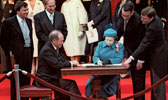
The date also prompted reflection on our constitutional monarchy. Far from irrelevant, we contended that this institution, evolved since the Magna Carta, serves as a bulwark limiting government power and preserving individual rights—a superior safeguard compared to republics that too easily devolve into unchecked statism.
Finally, we delved deeply into the environmentalist movement, reading an prescient 1969 essay by Ayn Rand that unmasks its anti-industrial, anti-human essence. Environmentalism, we demonstrated, is not about genuine pollution control (a technological issue) but about imposing collectivist dictatorship under the guise of ecological crusade. A caller’s passionate defense of balance with nature highlighted the spiritual underpinnings of this ideology, yet underscored how it often justifies coercing others.
These discussions reaffirm that true progress lies in defending individual freedom and reason against collectivist assaults. Awareness of these connections is just right.