A Brief History And Policy Overview Of The British Freedom Party
How Saying ‘Yuck To Curry’ Has Become A Reportable Racial Incident
Double Jeopardy – Retro Activism By The Multi-Cultured
Multi-Racial? Yes. Multi-Cultural? No.
Talk About Just Right – Your Feedback, Limericks, Suggestions
First Strike As Retaliation
Trigger Happy – Knowing When To Take The Military Offensive
Do You Mind? Or Does That Not Compute?
Post Script: The comments made about Fred Rogers turned out to be an urban myth. We should have verified the story first.
An Explosive Suggestion: Canada In The Nuclear Club
Gunning For Control – Arguments In The Gun Registry Debate
Cukier Vs Metz – Gun Ownership: A Right? Or A Privilege?
Constitutional Rights – And Wrongs
Forgettance Day – Forgetting The Causes Of War, While ‘Remembering’ Its Horrors
How And Why We Lost The First And Second World Wars
Sacrifice – Religion – Faith: The Roots Of War And The Enemies Of Freedom
Superstitious? You Won’t Be For Long. The End Of The World Is Coming — In 2012!
Comments Off on 30 – War Heroes Refuse to Sacrifice
Nov082007
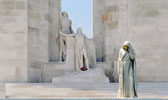
As Remembrance Day draws near, reflection turns to the Canadians who risked everything in battle. Courage lies not in sacrifice but in the refusal to surrender life, liberty, or property to aggressors. Soldiers fight to win and survive, not to die. Their stand against force preserves freedom, distinguishing battlefield losses from everyday peacetime tragedies.
Current events and past discussions add depth. Marc Emery’s case underscores a broader fight for liberty beyond marijuana. Currency shifts show how a strong loonie pressures prices and rewards cross-border shopping, reminding everyone that real value matters. Job stress patterns confirm routine work heightens depression while choice and variety ease it.
Afghanistan reports challenge media narratives; polls reveal most Afghans welcome foreign troops and reject the Taliban. Robotics point to a future of intelligent companions and household helpers. Gun control efforts backfire, while concealed-carry laws link to falling crime rates.
Light-hearted definitions expose contradictions in political language, from bureaucracy as a perpetual inertia machine to a candidate as someone who stands for what voters will fall for.
These threads weave together insights on war, peace, and rights that feel just right.
Comments Off on 021 – Star Trek New Voyages / Fascism and frogs
Sep062007
In today’s episode of Just Right, the airwaves crackle with critiques of Canadian politics, drawing from Andrew Coyne’s blunt assessment in the National Post that our federal and provincial scenes embody sheer vacuity—Liberals peddling unattainable environmental targets and Conservatives abandoning policy altogether. Provincial elections in Ontario loom as tedious non-events, riddled with broken promises and regional squabbles, while energy debates expose the nonsense of conservation fantasies versus nuclear sense, as David Frum highlights the waste in deferring to ignorant fears.
The discussion shifts to the enduring allure of Star Trek, where amateur productions at newvoyages.com revive the original series with superior effects but amateur acting, featuring veterans like Walter Koenig. Beyond gadgets, Star Trek serves as a moral barometer, exploring philosophy through dramatic devices like the prime directive—echoing laissez-faire non-interference—and tackling racism, individual rights, and human nature in ways realism cannot.
Building on last week’s socialism segment, fascism emerges as the flip side, illustrated by the frog parable: gradual heat increases unnoticed until boiling, mirroring Ontario’s creeping state controls over private property, from smoking bans to rent controls and pay equity laws. These policies, though labeled liberal or conservative, embody fascist doctrine where control equals ownership, eroding freedoms without outright nationalization.
Finally, Victor Davis Hanson’s call to study war underscores its utilitarian role in ending tyrannies, while Ayn Rand pins wars on statism’s institutionalized violence, contrasting with capitalism’s historic peace from 1815 to 1914. As pressures mount in our mixed economy, recognizing these dynamics keeps perspectives just right.
Comments Off on 010 – Anti-idling / Freedom and risk / War – What is it good for? | Anthony Verberkmoes
Jun212007
In this edition of Just Right, we delved into the perennial surrender of freedom in exchange for an illusion of security, exposing how easily people trade their liberties for empty promises of safety. From London’s absurd anti-idling bylaws—designed to “educate” drivers with fines while exempting the very conditions where pollution matters most—to Canada’s no-fly list and post-9/11 restrictions that inconvenience innocents while achieving little against real threats, the pattern is clear: government overreach thrives on misplaced fears and misjudged risks.
We then turned to the Ontario provincial election circus, where Liberals and Progressive Conservatives alike peddle massive spending sprees—subsidies for “energy-efficient big cars,” billions for transit boondoggles, and John Tory’s push to fund religious schools at taxpayer expense—all while robbing Peter to pay Paul under the guise of compassion and progress. Add in school boards conjuring surpluses through creative accounting to avoid accountability for declining enrollments, and the fiscal irresponsibility becomes undeniable.
Guest Anthony Verberckmoes of Indymedia joined us to promote the Regional Social Forum, sparking a spirited debate on war, terrorism, and Western interventions in Afghanistan and Iraq—where one side sees self-defense against tyrannical regimes, and the other views imperial hypocrisy driven by oil and power.
Understanding these connections between personal freedom, government intrusion, electoral vote-buying, and the justifications for war is Just Right.