Talk About Just Right – Your Feedback, Limericks, Suggestions
First Strike As Retaliation
Trigger Happy – Knowing When To Take The Military Offensive
Do You Mind? Or Does That Not Compute?
Post Script: The comments made about Fred Rogers turned out to be an urban myth. We should have verified the story first.
An Explosive Suggestion: Canada In The Nuclear Club
Gunning For Control – Arguments In The Gun Registry Debate
Cukier Vs Metz – Gun Ownership: A Right? Or A Privilege?
Constitutional Rights – And Wrongs
Forgettance Day – Forgetting The Causes Of War, While ‘Remembering’ Its Horrors
How And Why We Lost The First And Second World Wars
Sacrifice – Religion – Faith: The Roots Of War And The Enemies Of Freedom
Superstitious? You Won’t Be For Long. The End Of The World Is Coming — In 2012!
Comments Off on 006 – Gas prices / Afghan war / Monarchy / Environmentalism
May242007
On this broadcast of Just Right, we addressed several pressing issues that continue to reflect fundamental principles of economics, politics, and philosophy. We began with the perennial complaints about rising gas prices, exposing the hypocrisy of politicians who decry high prices while simultaneously advocating policies to reduce consumption. As we explained, prices reflect the immutable law of supply and demand—a natural equilibrium that politicians like Liberal MP Dan McTeague and Progressive Conservative proposals foolishly seek to manipulate through increased regulation or advance notice requirements. Such interventions only lead to shortages, rationing, and further distortions of the market.
We then turned to Canada’s mission in Afghanistan, supporting Prime Minister Harper’s commitment despite public weariness fueled by media narratives. With relatively low casualties compared to everyday risks at home, we argued that abandoning the mission prematurely would constitute defeat. Negotiating with the Taliban, as suggested by some, is absurd given their ideological intransigence.
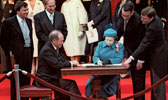
The date also prompted reflection on our constitutional monarchy. Far from irrelevant, we contended that this institution, evolved since the Magna Carta, serves as a bulwark limiting government power and preserving individual rights—a superior safeguard compared to republics that too easily devolve into unchecked statism.
Finally, we delved deeply into the environmentalist movement, reading an prescient 1969 essay by Ayn Rand that unmasks its anti-industrial, anti-human essence. Environmentalism, we demonstrated, is not about genuine pollution control (a technological issue) but about imposing collectivist dictatorship under the guise of ecological crusade. A caller’s passionate defense of balance with nature highlighted the spiritual underpinnings of this ideology, yet underscored how it often justifies coercing others.
These discussions reaffirm that true progress lies in defending individual freedom and reason against collectivist assaults. Awareness of these connections is just right.