Podcast: Play in new window | Download (20.9MB) | Embed

The Health Care Debate Everyone Wants To Avoid
Tommy Douglas: Hero Or Villain?
The Ugly Truth Behind The Principles Of Medicare
What’s Wrong With ‘Simplistic’ Solutions?
Podcast: Play in new window | Download (20.9MB) | Embed
The Health Care Debate Everyone Wants To Avoid
Tommy Douglas: Hero Or Villain?
The Ugly Truth Behind The Principles Of Medicare
What’s Wrong With ‘Simplistic’ Solutions?
Podcast: Play in new window | Download (64.9MB) | Embed

Socialism Or Fascism? What Kind Of Health Care System Should You Be Forced To Buy?
Denial, Evasion, Ridicule – Avoiding The Debate
The Swiss System – From The Fire Into The Frying Pan?
The Undemocratic Debate – Denying Choice To Others
Podcast: Play in new window | Download (Duration: 57:33 — 66.0MB) | Embed

Health Care Systems: Canada, United States, Europe
Health Care System Horror Stories
Canadian And American Medicare: Made In India
Health Care Cures – Worse Than The Disease
Podcast: Play in new window | Download (Duration: 54:42 — 62.8MB) | Embed

Health Care Fascism Meets Green Fascism – Idling By-laws Are A Fraud
Idling By-laws Are Propaganda – Paid For By Health Care Tax Dollars!
Shiver And Sweat – Why Politicians Want You To Be Uncomfortable And Inconvenienced
Bad Laws Are Caused By Bad Politicians
Natural Resources Canada – London Ontario By-law Case Study: Of Fraud, Misrepresentation, And Propaganda

Continuing our critique of Canada’s socialized health care system, we feature compelling insights from Dr. Tom Dorman, a physician who fled both the British and Canadian systems. Dorman rightly defines true insurance as voluntary asset protection against catastrophe—not the compulsory, taxpayer-funded scheme masquerading as “health insurance” today. Mandatory coverage, he argues, reduces patients to mere chattels, valued only until treatment becomes uneconomical, much like cattle on a farm.
The incoming CMA president, Brian Day, claims to inject “market principles” into the public system while insisting full privatization is impossible. This contradiction exposes a deeper flaw: genuine markets thrive on voluntary exchange, not coerced taxation. Day’s approach merely rearranges the deck chairs on a sinking collectivist ship.
Shifting to another form of taxpayer plunder, arts organizations lobby politicians for forced funding, equating their subsidies to health care entitlements. John Tory enthusiastically obliges, promising multi-year commitments and councils to “nourish” culture. Yet culture flourishes through voluntary support, not government coercion. The Freedom Party correctly condemns this as morally repugnant—theft disguised as benevolence.
Finally, we examine Nazism’s collectivist roots. Adolf Hitler’s regime built a popular welfare state financed by plundering Jews and conquered nations. The National Socialist German Workers’ Party delivered “benefits” through altruism and sacrifice for the collective—principles echoing modern statism. Hitler’s vaunted Aryan superiority rested not on intellect or strength, but on willingness to self-sacrifice for the community.
Recognizing collectivism’s destructive patterns in health care, arts funding, and historical tyranny offers the perspective that is just right.
Canada’s health care system faces intense scrutiny as private alternatives challenge the government monopoly. A groundbreaking private emergency facility in Vancouver operates efficiently, with no wait times, cheerful staff, and immediate treatment—for those willing to pay directly. Founded by Dr. Mark Godley, this center highlights the advantages of private motivation and flat management, free from bureaucratic hierarchies that plague the public system.
The Canadian Medical Association surprises many by advocating private insurance and contracting out services when public timelines fail. Yet politicians like John Tory muddy the waters, promising “private” clinics that still forbid direct payment, extending the public crisis rather than resolving it. True private care requires private payment—anything else remains government-controlled, no matter the label.
Michael Moore’s Sicko praised universal systems, but reality shows the opposite: restricted choices, artificial doctor shortages from past cost-cutting decisions, and infinite demand for “free” services. The internet draws fire for amplifying uninformed opinions, yet it merely reveals what public discourse has always been—often shallow and misguided.
Deeper still lies the issue of freedom itself. Canadians rarely demand liberty from taxes, regulations, or social engineering. As philosopher John Macmurray observes, people fear freedom more than they crave it, choosing security and frustrating their own potential. History proves that valuing freedom brings both freedom and security—while prioritizing security risks losing both.
In exploring these contradictions, from health care to politics, we find the balance just right.
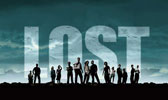
We delve into the enigmatic world of the TV series Lost, proposing that it transcends linear storytelling and serves as an allegory for group therapy in a psychiatric setting. The island symbolizes an institution where troubled characters confront their inner demons, with “the others” representing doctors and administrators, and deaths signifying cures. This interpretation explains the show’s mysteries, from the black smoke as encroaching reality to flashbacks revealing real-life traumas, and it highlights a shift in television toward thought-provoking narratives that challenge viewers.
Shifting focus, we examine Canada’s manufacturing woes amid global trade pressures from the US, Japan, and South Korea. Union demands and high labor costs—$75 per hour for Big Three autoworkers versus $45 for Toyota—undermine competitiveness, as evidenced by Ford’s recent quality wins in JD Power ratings failing to offset these disparities. Strikingly, from 1996 to 2005, Canada lost 208 days to labor disputes per metric, far exceeding OECD and UK averages, deterring investment. The rising Canadian dollar, fueled by US war expenditures, exacerbates this, while government hybrid incentives spark counterproductive rebates from competitors like Honda. Environmental regulations, high insurance, gas prices, and Ontario’s minimum wage hikes to $10.25 further strain the sector.
In education, Thames Valley School Board’s $9 million shortfall from declining enrollment underscores monopoly inefficiencies, where 80% of costs are salaries yet crises persist regardless of student numbers. We touch on the University Students’ Council’s new ethics codes post-spoof controversy, a lesson in humor’s absence, and Europe’s carbon markets, where free permits yield utility profits but burden consumers—another green tax scheme.
Finally, we critique Michael Moore‘s Sicko, which ignores Canada’s doctor shortages and champions socialized medicine that demands police-state controls to function, enslaving professionals while fostering a “me, me, me” blame game. True care thrives in markets, not monopolies. As always, pursuing freedom and reason keeps everything just right.