019 – How stupid people are wrecking politics

 Comments Off on 019 – How stupid people are wrecking politics
Aug 232007
 

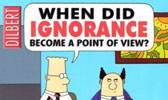
When did ignorance become a point of view?

Canada’s health care system faces intense scrutiny as private alternatives challenge the government monopoly. A groundbreaking private emergency facility in Vancouver operates efficiently, with no wait times, cheerful staff, and immediate treatment—for those willing to pay directly. Founded by Dr. Mark Godley, this center highlights the advantages of private motivation and flat management, free from bureaucratic hierarchies that plague the public system.

The Canadian Medical Association surprises many by advocating private insurance and contracting out services when public timelines fail. Yet politicians like John Tory muddy the waters, promising “private” clinics that still forbid direct payment, extending the public crisis rather than resolving it. True private care requires private payment—anything else remains government-controlled, no matter the label.

Michael Moore’s Sicko praised universal systems, but reality shows the opposite: restricted choices, artificial doctor shortages from past cost-cutting decisions, and infinite demand for “free” services. The internet draws fire for amplifying uninformed opinions, yet it merely reveals what public discourse has always been—often shallow and misguided.

Deeper still lies the issue of freedom itself. Canadians rarely demand liberty from taxes, regulations, or social engineering. As philosopher John Macmurray observes, people fear freedom more than they crave it, choosing security and frustrating their own potential. History proves that valuing freedom brings both freedom and security—while prioritizing security risks losing both.
In exploring these contradictions, from health care to politics, we find the balance just right.

Transcript Donate

018 – Faith Vs. Reason In Politics | Paul McKeever

 Comments Off on 018 – Faith Vs. Reason In Politics | Paul McKeever
Aug 162007
 

Paul McKeever 

Paul McKeever, leader of the Freedom Party of Ontario, joins the discussion to explore a fundamental question facing Western society: should public policy rest on faith, consensus, or reason?
The West has long thrived by keeping religious belief separate from lawmaking. Historical figures like Jesus, with “render unto Caesar,” and Lord Acton drew clear lines between earthly governance and spiritual matters. Yet today, faith increasingly influences political decisions, from openly religious parties to policies inspired by unquestioned convictions rather than evidence.

Global warming illustrates this danger vividly. Graphs spanning millennia show temperature rises preceding CO2 increases by centuries, driven by natural solar and oceanic cycles—yet political narratives reverse this causality to push agendas. Environmentalism often adopts apocalyptic tones reminiscent of religious prophecy, while socialism echoes faith-based redistribution without regard for individual rights or reality.

In Ontario, proposals for faith-based school funding highlight the risk. Extending taxpayer dollars to religious education invites government oversight that could erode freedoms on both sides—either indoctrinating irrationality or watering down beliefs under state regulation. True separation demands private funding, leaving parents free to choose while keeping governance grounded in observable facts.

Consensus and appeals to authority fare no better, as they sideline independent thought. Superstitions, whether about crop planting or public policy, lead to fanaticism when elevated to conviction. Reason alone—logic applied to physical evidence—offers a reliable guide for human flourishing and freedom.

Only through reason do we navigate these challenges in a way that is just right.

Transcript Clips & Credits Donate

016 – Global Warming: Ad Hominem Assault

 Comments Off on 016 – Global Warming: Ad Hominem Assault
Aug 022007
 

Maximum Speed 100

On a sweltering August day in London, Ontario, the heat outside mirrors the heated debates that dominate public discourse. Letters to the editor reveal a disturbing trend: instead of engaging ideas, critics launch personal attacks. In the global warming controversy, skeptics face accusations of being industry shills or non-scientists, while proponents escape scrutiny altogether. Consensus gets mistaken for science, yet history shows that truth often emerges from lone voices challenging the majority.

Marijuana use in Canada draws similar irrational responses. Statistics highlight higher consumption here than in decriminalized nations, yet the real issue remains one of principle. Government lacks the moral authority to punish peaceful choices that harm no one else. Criminalization fails to deter, while freedom respects individual sovereignty.

Photo radar and speed limits expose another myth. Evidence from jurisdictions shows that automated enforcement slows traffic but increases rear-end collisions and fatalities. Higher, naturally observed speeds reduce congestion and time on the road, lowering accident risk. Germany’s Autobahn demonstrates that well-engineered highways with unrestricted sections achieve superior safety records.

Fears of World War III and debates over the monarchy remind listeners that freedom requires eternal vigilance. Personal liberty erodes gradually, often under the guise of noble causes. Defending it demands reason, not emotion or consensus—and that defense is just right.

Transcript Donate

014 – All Suspects Guilty at City Hall

 Comments Off on 014 – All Suspects Guilty at City Hall
Jul 192007
 

Sicko

Municipal politics in London exposes the absurdity of government overreach. City Hall launches a half-million-dollar training program for all employees on “respect” and “woman abuse,” prompted by a 1999 incident long past. Taxpayers foot the bill while basic civility should already be expected from those hired to serve the public. Spending public money to rehabilitate offenders on the public payroll amounts to rewarding bad behavior instead of simply firing those responsible.

Garbage collection policies reveal similar nonsense. New bag limits and weight restrictions punish conscientious residents who already recycle diligently, while ignoring core service improvements. Conscientious citizens struggle under arbitrary rules imposed during extended pickup delays, yet administrators justify restrictions by citing other cities—hardly a principled argument.

Global warming debates shift to economics, where carbon taxes emerge as the latest forced intervention. Proponents promise revenue-neutral shifts that somehow fund everything without consequences, but reality demonstrates otherwise. Artificially hiking energy prices shrinks economies and lowers living standards; no free lunch exists when governments manipulate markets through coercion disguised as “pricing signals.”

Healthcare discussions highlight dangers of single-payer systems. Private insurance faces legitimate criticism for claim denials, yet replacing it with government as both provider and referee guarantees even less accountability. Countries experimenting with fully socialized models now move toward privatization, while advocates here push in the opposite direction. Dental care proposals follow the same flawed logic—promising “free” services that inevitably ration access and inflate costs.

Marijuana prohibition persists as one of the most irrational policies on the books. Canadians consume at rates far exceeding global averages, even surpassing nations where the drug is tolerated. Criminalization creates black markets and inflated prices for a plant that grows virtually anywhere, while legalization with reasonable taxation offers a far more rational approach.

These issues all connect through one common thread: governments assuming control over individual choices, always with unintended consequences that justify yet more control. Recognizing this pattern remains just right.

Transcript Donate

013 – Disarming Citizens Empowers Tyrants | Jim Montag

 Comments Off on 013 – Disarming Citizens Empowers Tyrants | Jim Montag
Jul 122007
 

Knotted Gun 
Gun ownership remains a fundamental right that no law-abiding citizen should ever surrender. In conversation with Jim Montag, operator of Great Lakes Guns and Knives shows, the evidence clearly demonstrates that gun control fails to reduce crime while disarmament invites tyranny.

Statistics reveal the stark reality. Britain’s near-total handgun ban in the late 1990s nearly doubled gun crimes within a decade, while violent crime now leads Western nations. London surpasses even New York in brutality, despite citizens being defenseless. Meanwhile, American states expanding concealed carry rights see crime drop, as criminals fear armed victims far more than distant police.

History offers no exceptions: every totalitarian regime first disarms its population to prevent resistance. Canada treads this dangerous path with ever-tighter restrictions that render self-defense nearly impossible—locked guns, separate ammunition, and proposals to flee one’s own home during invasion. Such laws protect criminals, not citizens.

Lawful gun owners prove overwhelmingly responsible, supporting harsh penalties for violent offenders while opposing registries that burden the innocent. The real solution targets criminals through mandatory sentencing, not disarming the peaceful.

Defending the individual right to bear arms stands just right against both street thugs and state overreach.

Note: Jim Montag passed away on March 24, 2008.

Transcript Clips & Credits Donate

010 – Anti-idling / Freedom and risk / War – What is it good for? | Anthony Verberkmoes

 Comments Off on 010 – Anti-idling / Freedom and risk / War – What is it good for? | Anthony Verberkmoes
Jun 212007
 

War

In this edition of Just Right, we delved into the perennial surrender of freedom in exchange for an illusion of security, exposing how easily people trade their liberties for empty promises of safety. From London’s absurd anti-idling bylaws—designed to “educate” drivers with fines while exempting the very conditions where pollution matters most—to Canada’s no-fly list and post-9/11 restrictions that inconvenience innocents while achieving little against real threats, the pattern is clear: government overreach thrives on misplaced fears and misjudged risks.

We then turned to the Ontario provincial election circus, where Liberals and Progressive Conservatives alike peddle massive spending sprees—subsidies for “energy-efficient big cars,” billions for transit boondoggles, and John Tory’s push to fund religious schools at taxpayer expense—all while robbing Peter to pay Paul under the guise of compassion and progress. Add in school boards conjuring surpluses through creative accounting to avoid accountability for declining enrollments, and the fiscal irresponsibility becomes undeniable.

Guest Anthony Verberckmoes of Indymedia joined us to promote the Regional Social Forum, sparking a spirited debate on war, terrorism, and Western interventions in Afghanistan and Iraq—where one side sees self-defense against tyrannical regimes, and the other views imperial hypocrisy driven by oil and power.

Understanding these connections between personal freedom, government intrusion, electoral vote-buying, and the justifications for war is Just Right.

Transcript Clips & Credits Donate

009 – Lost / Unions / Global warming and the carbon market / Sicko

 Comments Off on 009 – Lost / Unions / Global warming and the carbon market / Sicko
Jun 142007
 

Lost

We delve into the enigmatic world of the TV series Lost, proposing that it transcends linear storytelling and serves as an allegory for group therapy in a psychiatric setting. The island symbolizes an institution where troubled characters confront their inner demons, with “the others” representing doctors and administrators, and deaths signifying cures. This interpretation explains the show’s mysteries, from the black smoke as encroaching reality to flashbacks revealing real-life traumas, and it highlights a shift in television toward thought-provoking narratives that challenge viewers.

Shifting focus, we examine Canada’s manufacturing woes amid global trade pressures from the US, Japan, and South Korea. Union demands and high labor costs—$75 per hour for Big Three autoworkers versus $45 for Toyota—undermine competitiveness, as evidenced by Ford’s recent quality wins in JD Power ratings failing to offset these disparities. Strikingly, from 1996 to 2005, Canada lost 208 days to labor disputes per metric, far exceeding OECD and UK averages, deterring investment. The rising Canadian dollar, fueled by US war expenditures, exacerbates this, while government hybrid incentives spark counterproductive rebates from competitors like Honda. Environmental regulations, high insurance, gas prices, and Ontario’s minimum wage hikes to $10.25 further strain the sector.

In education, Thames Valley School Board’s $9 million shortfall from declining enrollment underscores monopoly inefficiencies, where 80% of costs are salaries yet crises persist regardless of student numbers. We touch on the University Students’ Council’s new ethics codes post-spoof controversy, a lesson in humor’s absence, and Europe’s carbon markets, where free permits yield utility profits but burden consumers—another green tax scheme.

Finally, we critique Michael Moore‘s Sicko, which ignores Canada’s doctor shortages and champions socialized medicine that demands police-state controls to function, enslaving professionals while fostering a “me, me, me” blame game. True care thrives in markets, not monopolies. As always, pursuing freedom and reason keeps everything just right.

Transcript Donate