013 – Disarming Citizens Empowers Tyrants | Jim Montag

 Comments Off on 013 – Disarming Citizens Empowers Tyrants | Jim Montag
Jul 122007
 

Knotted Gun 
Gun ownership remains a fundamental right that no law-abiding citizen should ever surrender. In conversation with Jim Montag, operator of Great Lakes Guns and Knives shows, the evidence clearly demonstrates that gun control fails to reduce crime while disarmament invites tyranny.

Statistics reveal the stark reality. Britain’s near-total handgun ban in the late 1990s nearly doubled gun crimes within a decade, while violent crime now leads Western nations. London surpasses even New York in brutality, despite citizens being defenseless. Meanwhile, American states expanding concealed carry rights see crime drop, as criminals fear armed victims far more than distant police.

History offers no exceptions: every totalitarian regime first disarms its population to prevent resistance. Canada treads this dangerous path with ever-tighter restrictions that render self-defense nearly impossible—locked guns, separate ammunition, and proposals to flee one’s own home during invasion. Such laws protect criminals, not citizens.

Lawful gun owners prove overwhelmingly responsible, supporting harsh penalties for violent offenders while opposing registries that burden the innocent. The real solution targets criminals through mandatory sentencing, not disarming the peaceful.

Defending the individual right to bear arms stands just right against both street thugs and state overreach.

Note: Jim Montag passed away on March 24, 2008.

Transcript Clips & Credits Donate

010 – Anti-idling / Freedom and risk / War – What is it good for? | Anthony Verberkmoes

 Comments Off on 010 – Anti-idling / Freedom and risk / War – What is it good for? | Anthony Verberkmoes
Jun 212007
 

War

In this edition of Just Right, we delved into the perennial surrender of freedom in exchange for an illusion of security, exposing how easily people trade their liberties for empty promises of safety. From London’s absurd anti-idling bylaws—designed to “educate” drivers with fines while exempting the very conditions where pollution matters most—to Canada’s no-fly list and post-9/11 restrictions that inconvenience innocents while achieving little against real threats, the pattern is clear: government overreach thrives on misplaced fears and misjudged risks.

We then turned to the Ontario provincial election circus, where Liberals and Progressive Conservatives alike peddle massive spending sprees—subsidies for “energy-efficient big cars,” billions for transit boondoggles, and John Tory’s push to fund religious schools at taxpayer expense—all while robbing Peter to pay Paul under the guise of compassion and progress. Add in school boards conjuring surpluses through creative accounting to avoid accountability for declining enrollments, and the fiscal irresponsibility becomes undeniable.

Guest Anthony Verberckmoes of Indymedia joined us to promote the Regional Social Forum, sparking a spirited debate on war, terrorism, and Western interventions in Afghanistan and Iraq—where one side sees self-defense against tyrannical regimes, and the other views imperial hypocrisy driven by oil and power.

Understanding these connections between personal freedom, government intrusion, electoral vote-buying, and the justifications for war is Just Right.

Transcript Clips & Credits Donate

009 – Lost / Unions / Global warming and the carbon market / Sicko

 Comments Off on 009 – Lost / Unions / Global warming and the carbon market / Sicko
Jun 142007
 

Lost

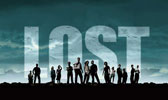
We delve into the enigmatic world of the TV series Lost, proposing that it transcends linear storytelling and serves as an allegory for group therapy in a psychiatric setting. The island symbolizes an institution where troubled characters confront their inner demons, with “the others” representing doctors and administrators, and deaths signifying cures. This interpretation explains the show’s mysteries, from the black smoke as encroaching reality to flashbacks revealing real-life traumas, and it highlights a shift in television toward thought-provoking narratives that challenge viewers.

Shifting focus, we examine Canada’s manufacturing woes amid global trade pressures from the US, Japan, and South Korea. Union demands and high labor costs—$75 per hour for Big Three autoworkers versus $45 for Toyota—undermine competitiveness, as evidenced by Ford’s recent quality wins in JD Power ratings failing to offset these disparities. Strikingly, from 1996 to 2005, Canada lost 208 days to labor disputes per metric, far exceeding OECD and UK averages, deterring investment. The rising Canadian dollar, fueled by US war expenditures, exacerbates this, while government hybrid incentives spark counterproductive rebates from competitors like Honda. Environmental regulations, high insurance, gas prices, and Ontario’s minimum wage hikes to $10.25 further strain the sector.

In education, Thames Valley School Board’s $9 million shortfall from declining enrollment underscores monopoly inefficiencies, where 80% of costs are salaries yet crises persist regardless of student numbers. We touch on the University Students’ Council’s new ethics codes post-spoof controversy, a lesson in humor’s absence, and Europe’s carbon markets, where free permits yield utility profits but burden consumers—another green tax scheme.

Finally, we critique Michael Moore‘s Sicko, which ignores Canada’s doctor shortages and champions socialized medicine that demands police-state controls to function, enslaving professionals while fostering a “me, me, me” blame game. True care thrives in markets, not monopolies. As always, pursuing freedom and reason keeps everything just right.

Transcript Donate

008 – Ontario election / G8 Summit / Health care / Wealth and poverty

 Comments Off on 008 – Ontario election / G8 Summit / Health care / Wealth and poverty
Jun 072007
 

G8 Summit


We observe once again how the political landscape in Ontario offers voters little more than a choice among varying degrees of statism, as the unofficial election campaign begins with Dalton McGuinty proroguing the legislature early. Parties compete not on principles of individual freedom, but on promises to expand government control over our lives and wallets—outbidding each other on subsidies, environmental mandates, and monopolies in essential services.

We note the irony: it is often the so-called conservatives who enact the most enduring leftist policies, from income taxes to health care monopolies and rent controls. True freedom requires protecting both personal and economic rights, yet no major party advocates this consistent principle. Instead, we see pragmatists in power pursuing control for its own sake, while restricting freedoms leads inevitably to less prosperity and greater tyranny.

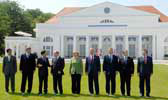
Globalism, properly understood, means voluntary cooperation and free trade among nations, not centralized control or anti-capitalist protests at summits like the ongoing G8. Health care remains a sacred cow of statism: a government monopoly that rations care, drives patients abroad, and bans private alternatives—unique to Ontario among Western jurisdictions. Choice and competition, not compulsion, would ensure better access and quality for all.

Finally, the perennial envy of wealth ignores how capitalism creates abundance for everyone, while socialism merely redistributes poverty. The rich deserve their earnings when gained through voluntary trade, not confiscation. In all these issues, the solution remains the recognition of individual rights and free markets—just right.

Transcript Donate

006 – Gas prices / Afghan war / Monarchy / Environmentalism

 Comments Off on 006 – Gas prices / Afghan war / Monarchy / Environmentalism
May 242007
 

Queen signs Constitution


On this broadcast of Just Right, we addressed several pressing issues that continue to reflect fundamental principles of economics, politics, and philosophy. We began with the perennial complaints about rising gas prices, exposing the hypocrisy of politicians who decry high prices while simultaneously advocating policies to reduce consumption. As we explained, prices reflect the immutable law of supply and demand—a natural equilibrium that politicians like Liberal MP Dan McTeague and Progressive Conservative proposals foolishly seek to manipulate through increased regulation or advance notice requirements. Such interventions only lead to shortages, rationing, and further distortions of the market.

We then turned to Canada’s mission in Afghanistan, supporting Prime Minister Harper’s commitment despite public weariness fueled by media narratives. With relatively low casualties compared to everyday risks at home, we argued that abandoning the mission prematurely would constitute defeat. Negotiating with the Taliban, as suggested by some, is absurd given their ideological intransigence.

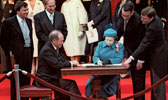
The date also prompted reflection on our constitutional monarchy. Far from irrelevant, we contended that this institution, evolved since the Magna Carta, serves as a bulwark limiting government power and preserving individual rights—a superior safeguard compared to republics that too easily devolve into unchecked statism.

Finally, we delved deeply into the environmentalist movement, reading an prescient 1969 essay by Ayn Rand that unmasks its anti-industrial, anti-human essence. Environmentalism, we demonstrated, is not about genuine pollution control (a technological issue) but about imposing collectivist dictatorship under the guise of ecological crusade. A caller’s passionate defense of balance with nature highlighted the spiritual underpinnings of this ideology, yet underscored how it often justifies coercing others.

These discussions reaffirm that true progress lies in defending individual freedom and reason against collectivist assaults. Awareness of these connections is just right.

Transcript Donate

005 – Natural Resources Stewardship Project: Global warming myths | Tom Harris

 Comments Off on 005 – Natural Resources Stewardship Project: Global warming myths | Tom Harris
May 172007
 

Tom Harris 

As we reflect on our latest broadcast here at Just Right, we find ourselves once again challenging the prevailing narratives that dominate public discourse, from the so-called consensus on global warming to the insidious creep of racial quotas in municipal hiring. In our conversation, we welcomed Tom Harris from the Natural Resources Stewardship Project, whose insights underscored the complexity of climate science and the dangers of politicizing it. We delved into the notion that much of what passes for environmental urgency is not rooted in objective facts but in a self-referential system of alarmism, where dissenters are branded as deniers while evidence like solar activity influencing planetary temperatures—including the melting polar ice caps on Mars—goes unaddressed.

We also revisited our primer on the Left-Right political spectrum, emphasizing that true consistency demands accountability to principles, and we invite our listeners to hold us to that standard. Turning to local matters, we applauded City Councilor Paul Van Meerbergen for his stand against policies that prioritize skin color over merit in job applications, a practice we see as a backward step toward racism disguised as equity. Disappointingly, figures like Harold Usher dismissed these concerns, ignoring the inherent quotas that such initiatives imply. We addressed a follow-up from caller Marcel on pollution and the environment, affirming that no political faction favors environmental degradation; rather, solutions lie in technological advancement and a robust economy, not in fear-mongering.

Our discussion extended to critiques of Al Gore‘s An Inconvenient Truth, highlighting its flawed equation on technology and old ideas, and we explored how carbon dioxide—far from a pollutant—is essential to life, enhancing plant growth and oxygen production. Bans on technologies like incandescent bulbs or used oil disposal reveal a deeper agenda: government control over energy, paving the way for globalism and wealth redistribution under the guise of climate action. We proposed that conservatives convene unbiased hearings to air both sides of the debate, ensuring decisions are grounded in reason.
In wrapping up, we shared a fascinating tidbit on turtles exhibiting negligible senescence, a reminder that nature holds mysteries worth exploring. Ultimately, navigating these issues requires rejecting hysteria in favor of rational inquiry that is just right.

Note: Guest’s voice did not record on archive file, though was broadcast on-air. The silence on the audio file has been removed.

Transcript Clips & Credits Donate

003 – Global Warming: Snow Job or Inconvenient Truth?

 Comments Off on 003 – Global Warming: Snow Job or Inconvenient Truth?
May 032007
 

003_Drive_168x100


The rapid cancellation of promising television series like Drive, starring Nathan Fillion, serves as a stark reminder of the flaws inherent in the ratings-driven system that dominates network decision-making. In a recent broadcast, we drew attention to how erratic scheduling, poor time slots, and direct competition with established hits doomed this intriguing program from the outset, much as it did with classics like the original Star Trek and Fillion’s earlier Firefly. Quality entertainment, we argued, cannot be solely measured by instantaneous viewer counts, which prioritize advertiser interests over creative merit and audience discovery.

Shifting to economic realities, we examined the persistent complaints surrounding rising gasoline prices, attributing them not to corporate greed or collusion, but to fundamental principles of supply and demand. Misconceptions abound, with many callers and commentators demanding price controls or boycotts—measures that would only exacerbate shortages by discouraging production. No new refineries have been built in North America for over three decades, yet our demand continues to rise, creating inevitable upward pressure on costs. Adjusted for inflation, gasoline remains a remarkable bargain when compared to everyday commodities like bottled water, underscoring the extraordinary efforts required to extract, refine, and distribute this essential resource.

Finally, we critiqued the prevailing environmental frenzy, particularly Al Gore‘s influential documentary An Inconvenient Truth, which we described as propaganda promoting government control over industry and individual choices. Contradictions in Gore’s data on CO2 emissions, exaggerated claims of scientific consensus, and the politicization of climate issues through fear and moral appeals were highlighted as evidence of a deeper agenda hostile to human progress and capitalism. True environmental stewardship aligns with rational advancement, not collectivist restrictions. Achieving this perspective requires rejecting alarmism and embracing free-market principles in a manner that’s just right.

Transcript Donate