023 – State Funding Kills Religious Education

 Comments Off on 023 – State Funding Kills Religious Education
Sep 202007
 

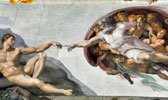
God and Adam

The controversial proposal to extend tax funding to faith-based schools dominates Ontario’s 2007 provincial election, yet the real issue escapes most observers. Both John Tory’s plan to integrate religious schools into the public system and Dalton McGuinty’s opposition mask the same danger: expanded government control over what children learn.

Tax dollars always come with strings. Once religious schools accept public funding, courts and bureaucrats dictate curriculum and policies, overriding faith-based distinctions. The Marc Hall case proves this principle— a Catholic board’s refusal to allow a same-sex prom date collapsed under Charter equality provisions, despite religious objections. He who pays the piper calls the tune.

Public education already suffers under this monopoly. Literacy rates decline, standards soften, and moral relativism replaces objective values. Extending funding merely grows the beast without addressing its failures. Creationism debates distract from the core problem: forcing taxpayers to subsidize others’ education choices while surrendering parental authority to the state.

True diversity demands separation of school and state. Parents must reclaim responsibility for their children’s education, free from coercive funding that homogenizes beliefs under the guise of inclusion. Only then can genuine freedom in education emerge—one that respects individual rights and rejects forced assimilation. That’s the perspective just right for preserving both faith and liberty.


Transcript Donate

022 – Afghanistan: A sense of the place | Arthur Majoor

 Comments Off on 022 – Afghanistan: A sense of the place | Arthur Majoor
Sep 132007
 

Arthur Majoor


Sergeant Arthur Majoor on Afghanistan: ‘A sense of the place’
Not your traditional peace-keeping mission
ISAF: A group effort in Afghanistan investment
Fighting the disease of terrorism

Your financial support is always appreciated:
❤️ PayPal

021 – Star Trek New Voyages / Fascism and frogs

 Comments Off on 021 – Star Trek New Voyages / Fascism and frogs
Sep 062007
 

Star Trek New Voyages


Stupid vacuous politics: Are you an air-head? Then Canadian politics could be for you!
Star Trek New Voyages: Where no television viewer has gone before!
Fascism and frogs
Why study war?
War protesters backing a bully

Your financial support is always appreciated:
❤️ PayPal

020 – Health care? / Hitler was a socialist

 Comments Off on 020 – Health care? / Hitler was a socialist
Aug 302007
 

Machine that goes Bing! 

Continuing our critique of Canada’s socialized health care system, we feature compelling insights from Dr. Tom Dorman, a physician who fled both the British and Canadian systems. Dorman rightly defines true insurance as voluntary asset protection against catastrophe—not the compulsory, taxpayer-funded scheme masquerading as “health insurance” today. Mandatory coverage, he argues, reduces patients to mere chattels, valued only until treatment becomes uneconomical, much like cattle on a farm.

The incoming CMA president, Brian Day, claims to inject “market principles” into the public system while insisting full privatization is impossible. This contradiction exposes a deeper flaw: genuine markets thrive on voluntary exchange, not coerced taxation. Day’s approach merely rearranges the deck chairs on a sinking collectivist ship.

Shifting to another form of taxpayer plunder, arts organizations lobby politicians for forced funding, equating their subsidies to health care entitlements. John Tory enthusiastically obliges, promising multi-year commitments and councils to “nourish” culture. Yet culture flourishes through voluntary support, not government coercion. The Freedom Party correctly condemns this as morally repugnant—theft disguised as benevolence.

Finally, we examine Nazism’s collectivist roots. Adolf Hitler’s regime built a popular welfare state financed by plundering Jews and conquered nations. The National Socialist German Workers’ Party delivered “benefits” through altruism and sacrifice for the collective—principles echoing modern statism. Hitler’s vaunted Aryan superiority rested not on intellect or strength, but on willingness to self-sacrifice for the community.

Recognizing collectivism’s destructive patterns in health care, arts funding, and historical tyranny offers the perspective that is just right.

Transcript Donate

019 – How stupid people are wrecking politics

 Comments Off on 019 – How stupid people are wrecking politics
Aug 232007
 

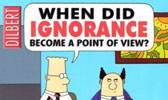
When did ignorance become a point of view?

Canada’s health care system faces intense scrutiny as private alternatives challenge the government monopoly. A groundbreaking private emergency facility in Vancouver operates efficiently, with no wait times, cheerful staff, and immediate treatment—for those willing to pay directly. Founded by Dr. Mark Godley, this center highlights the advantages of private motivation and flat management, free from bureaucratic hierarchies that plague the public system.

The Canadian Medical Association surprises many by advocating private insurance and contracting out services when public timelines fail. Yet politicians like John Tory muddy the waters, promising “private” clinics that still forbid direct payment, extending the public crisis rather than resolving it. True private care requires private payment—anything else remains government-controlled, no matter the label.

Michael Moore’s Sicko praised universal systems, but reality shows the opposite: restricted choices, artificial doctor shortages from past cost-cutting decisions, and infinite demand for “free” services. The internet draws fire for amplifying uninformed opinions, yet it merely reveals what public discourse has always been—often shallow and misguided.

Deeper still lies the issue of freedom itself. Canadians rarely demand liberty from taxes, regulations, or social engineering. As philosopher John Macmurray observes, people fear freedom more than they crave it, choosing security and frustrating their own potential. History proves that valuing freedom brings both freedom and security—while prioritizing security risks losing both.
In exploring these contradictions, from health care to politics, we find the balance just right.

Transcript Donate

018 – Faith Vs. Reason In Politics | Paul McKeever

 Comments Off on 018 – Faith Vs. Reason In Politics | Paul McKeever
Aug 162007
 

Paul McKeever 

Paul McKeever, leader of the Freedom Party of Ontario, joins the discussion to explore a fundamental question facing Western society: should public policy rest on faith, consensus, or reason?
The West has long thrived by keeping religious belief separate from lawmaking. Historical figures like Jesus, with “render unto Caesar,” and Lord Acton drew clear lines between earthly governance and spiritual matters. Yet today, faith increasingly influences political decisions, from openly religious parties to policies inspired by unquestioned convictions rather than evidence.

Global warming illustrates this danger vividly. Graphs spanning millennia show temperature rises preceding CO2 increases by centuries, driven by natural solar and oceanic cycles—yet political narratives reverse this causality to push agendas. Environmentalism often adopts apocalyptic tones reminiscent of religious prophecy, while socialism echoes faith-based redistribution without regard for individual rights or reality.

In Ontario, proposals for faith-based school funding highlight the risk. Extending taxpayer dollars to religious education invites government oversight that could erode freedoms on both sides—either indoctrinating irrationality or watering down beliefs under state regulation. True separation demands private funding, leaving parents free to choose while keeping governance grounded in observable facts.

Consensus and appeals to authority fare no better, as they sideline independent thought. Superstitions, whether about crop planting or public policy, lead to fanaticism when elevated to conviction. Reason alone—logic applied to physical evidence—offers a reliable guide for human flourishing and freedom.

Only through reason do we navigate these challenges in a way that is just right.

Transcript Clips & Credits Donate

017 – Robots Rising: Sentient or Soulless?

 Comments Off on 017 – Robots Rising: Sentient or Soulless?
Aug 092007
 

Robbie the robot

Safety concerns already dominate discussions. Reports cite dozens of robot-related accidents in Britain alone, from crushings to molten aluminum spills. Japan’s guidelines demand sensors, soft materials, and emergency shut-offs, while experts debate liability when autonomous robots learn unpredictably. Isaac Asimov’s famous Three Laws of Robotics sound logical—protect humans, obey orders, preserve self—but prove riddled with unintended consequences, as Asimov himself demonstrated in his stories.

Deeper questions arise about sentience and morality. Programming right and wrong into silicon minds challenges metaphysics: can machines ever possess true choice, or do they merely execute predetermined instructions? Ethics symposiums tackle unsettling issues, from robots strong enough to crush owners to the imminent arrival of sex robots.

Local politics mirrors these themes. Debates at London City Hall over industrial development reveal a socialist resistance to market-driven growth, even when projects involve high-tech robotics. Labels like “socialist cabal” spark outrage, yet the contrast remains clear: government control versus individual management, coercion versus voluntary exchange. Socialism relies on force to achieve its ends, while true management thrives only in freedom.

Philosophy underpins it all—metaphysics, epistemology, and morality guide whether technology serves good or evil. The choice belongs solely to creators and users.

Recognizing these polarities in technology and politics proves just right.

Transcript Donate