30 – War Heroes Refuse to Sacrifice

 Comments Off on 30 – War Heroes Refuse to Sacrifice
Nov 082007
 

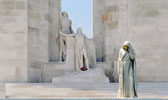
Vimy Memorial

As Remembrance Day draws near, reflection turns to the Canadians who risked everything in battle. Courage lies not in sacrifice but in the refusal to surrender life, liberty, or property to aggressors. Soldiers fight to win and survive, not to die. Their stand against force preserves freedom, distinguishing battlefield losses from everyday peacetime tragedies.

Current events and past discussions add depth. Marc Emery’s case underscores a broader fight for liberty beyond marijuana. Currency shifts show how a strong loonie pressures prices and rewards cross-border shopping, reminding everyone that real value matters. Job stress patterns confirm routine work heightens depression while choice and variety ease it.

Afghanistan reports challenge media narratives; polls reveal most Afghans welcome foreign troops and reject the Taliban. Robotics point to a future of intelligent companions and household helpers. Gun control efforts backfire, while concealed-carry laws link to falling crime rates.

Light-hearted definitions expose contradictions in political language, from bureaucracy as a perpetual inertia machine to a candidate as someone who stands for what voters will fall for.
These threads weave together insights on war, peace, and rights that feel just right.

Transcript Donate

29 – Marc Emery: Martyr to Madness?

 Comments Off on 29 – Marc Emery: Martyr to Madness?
Nov 012007
 

Marc Emery

Marc Emery’s impending extradition to the United States for selling marijuana seeds raises profound questions about sovereignty, justice, and the irrationality of drug prohibition laws. In this episode of Just Right, the discussion centers on Emery’s lifelong activism, tracing his path from a London bookseller to a political firebrand challenging censorship, taxes, and government overreach.

Emery emerges as a complex figure—abrasive yet principled, self-promoting like Muhammad Ali, but driven by a passion for individual freedom. His early debates with the host at City Lights Bookshop sparked shared ventures, including publishing newspapers like The London Tribune and The London Metro Bulletin, and co-founding the Freedom Party of Ontario in 1984. Campaigns against the 1991 Pan Am Games bid saved London taxpayers millions, while fights against Sunday shopping laws and business improvement areas demonstrated how civil disobedience can triumph over bureaucratic folly.

Clips from films like Mr. Smith Goes to Washington and documentaries such as Prince of Pot: The U.S. vs. Marc Emery illustrate Emery’s influences and current plight, where U.S. authorities target him not just for seeds, but for funding legalization efforts—a clear political vendetta. Speakers in these excerpts, including Emery himself comparing his struggle to Martin Luther King and Nelson Mandela, highlight the absurdity of facing life imprisonment in America for acts that warrant mere fines in Canada. Note that these views do not necessarily reflect those of the host or Just Right.

The episode underscores broader implications: if Canada extradites Emery, it surrenders sovereignty to insane U.S. drug policies, setting a dangerous precedent for any activist. Differences between Emery’s anarchistic leanings and the host’s perspectives add nuance, yet unity persists on core principles of liberty.

In examining Emery’s story, the pursuit of justice demands vigilance against such moral obscenities, ensuring freedoms remain just right for all.

Transcript Donate

028 – Justice Betrayed by Socialism

 Comments Off on 028 – Justice Betrayed by Socialism
Oct 252007
 

An Inconvenient Truth

Justice remains an elusive ideal in our courtrooms, where personal opinions often overshadow reliable law and precedent. Discussions with friends like Paul McKeever highlight this growing concern, as judges stray from the core principles of justice. Definitions from history remind us that justice stems from obligatory rights within society, evolving into enforceable laws, yet rigid statutes sometimes fail to deliver fairness, leading to bodies like courts of equity.

Our experiences before the Ontario Human Rights Commission revealed a system accepting hearsay and innuendo, far from true justice. Frédéric Bastiat’s insights in “The Law” clarify that personality, liberty, and property preexist laws, which should organize legitimate self-defense against threats. Government intervenes only through force, legitimate solely when protecting these rights; otherwise, it becomes plunder, as seen in tariffs, subsidies, and progressive taxes that Bastiat labeled socialism.

Social justice distorts this, promoting economic redistribution by force, blaming crime on conditions rather than individual responsibility, and masking coercion as altruism. Government acts like a gun, compelling wealth transfer under the guise of charity, punishing productivity while rewarding the non-productive—echoing Marxist bromides that foster injustice.

City Hall’s absurd proposals, like requiring permits to cut trees on private property to preserve London’s “forest city” image, violate fundamental property rights. Councillors like Joni Batchelor justify this with lemming logic, ignoring that rational owners value trees for aesthetics and worth. Meanwhile, Toronto’s added taxes signal financial mismanagement, blending socialism’s burdens with direct fees.

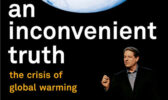
Al Gore’s Nobel Prize elevates junk science, as a UK court exposed nine errors in “An Inconvenient Truth,” from exaggerated sea-level rises to misrepresented polar bear drownings. Critics like Terence Corcoran note this discredits climate alarmism, while defenders dismiss rulings illogically. Global warming debates ignore natural cycles, with some now linking heat to wars—a junk logic leap tracing to anti-industrial roots.
In this era of distorted justice and environmental hysteria, finding balance proves essential, as only principles grounded in liberty keep society just right.

Transcript Donate

027 – Money: Virtue’s barometer or theft’s tool?

 Comments Off on 027 – Money: Virtue’s barometer or theft’s tool?
Oct 182007
 

Money

Money fascinates and frustrates in equal measure. With the Canadian dollar hovering at par against its American counterpart, conversations turn to exchange rates, yet few pause to question the deeper nature of this everyday abstraction. Why accept a piece of paper or a digital entry in exchange for real goods and services? The theme emerges clearly: money reveals far more about morality and freedom than mere pricing.
Three paths exist to acquire anything in life—by gift, by earning through voluntary trade, or by taking without consent, which amounts to theft by force or fraud. Politics often disguises the third as virtue, labeling wealth redistribution as equity while condemning the same act in private life as criminal.

Government compulsion in transactions denies consent, eroding the moral foundation of exchange. Voluntary trades create win-win outcomes, where both parties value what they receive more than what they give up, increasing overall wealth through mutual benefit. Forced exchanges, common in state spending, depreciate value and breed resentment.

Subjective value drives prices, as illustrated in everyday encounters—like a mother discovering why a rare comic book commands far more than a common one. Collectors assign worth based on desire, proving value lies not in inherent properties but in individual judgment. This principle exposes fallacies in collectivist schemes that treat wealth as a fixed pie to be sliced “fairly.” Production generates wealth; productivity, not mere hard work, elevates living standards by creating more with less effort.

Inflation confuses money with wealth itself, an illusion exploited by governments that expand credit and currency supply, eroding purchasing power—especially for those least able to hedge against it. Historical examples abound: paper currencies collapse while gold retains value across millennia. Credit creation by banks, often politically enabled, mimics counterfeiting, transferring wealth subtly but surely.

Discussions with callers highlight supply and demand in professions, the pitfalls of materialism mistaken for happiness, and the contradictions in visions of moneyless utopias like those in Star Trek. True progress stems from free markets where consent reigns, not coercion disguised as social good.

Money is Just Right as the barometer of a society’s virtue.

Transcript Donate

026 – Ontario election 2007

 Comments Off on 026 – Ontario election 2007
Oct 112007
 

Stress

The recent Ontario election delivers no shocks, with Liberals securing another majority amid record-low voter turnout. Faith-based funding emerges as the flashpoint, revealing deep divides: Liberals cling to a state monopoly that forces double payments on parents opting for private schools, while Conservatives peddle taxpayer-funded “choice” that contradicts true freedom. This debate echoes Ontario’s tangled history, where education roots in political control—from Simcoe’s 1791 fears of republican heresy to the 1807 District Public School Act subsidizing wages, and Strachan’s 1816 Common School Act demanding allegiance to the crown. Reformers and Tories battled over funding from clergy reserves, all aiming to suppress “Yankee” ideas and instill moral training from the Scriptures.

Public education’s monopoly prioritizes indoctrination over learning, as Khalil Ramal admits—it’s about “integrating” society into one vision. Shared values like freedom to disagree must unite us, yet the system stifles innovation, rewards union seniority over merit, and inflates costs even as enrollment drops. Complaints from the 1980s ring true today: political masters ignore classrooms, curricula bow to pressure not preferences, and diplomas lose meaning amid literacy gaps.

Michael Coren’s cynical Thanksgiving rant captures broader discontent—Canada as a “home on native land” plagued by unresolved claims, eroding freedoms via Human Rights Commissions, lenient justice for criminals, a flawed Charter empowering radicals, and a health care system ranked 30th globally. Abroad, respect fades as our warrior heritage withers under emasculation.

Federally, Harper’s drug war escalation promises mandatory sentences and millions for enforcement, prevention, and treatment, yet ignores failed prohibition’s lessons. Criminalizing substances empowers gangs, inflates profits tax-free, and confuses addiction with restraint of trade. Better to legalize, end welfare for abusers, and hold individuals accountable for actions, not possessions.

Workplace stress hits hardest in repetitive jobs, while Canada Post’s antiquated monopoly exemplifies government inefficiency—outdated machines, accidents galore, and static delivery amid urban growth.
In this landscape of monopolies and misplaced priorities, finding balance remains just right for true progress.

Transcript Donate

025 – Steve Holmes: NDP candidate for London-North-Centre – Ontario election 2007

 Comments Off on 025 – Steve Holmes: NDP candidate for London-North-Centre – Ontario election 2007
Oct 042007
 

025_Steve_Holmes_168x100 

In this pre-election dialogue, NDP candidate Steve Holmes joins us in studio to outline his party’s vision for Ontario, just days before the October 10 vote. Holmes, a long-time bus driver and union leader, shares his background in representing workers through the ATU 741 and London District Labor Council, emphasizing the NDP’s roots in labor advocacy. The conversation quickly turns to the interconnected planks of Howard Hampton’s platform, linking healthcare accessibility—including relisted services and dental care—to environmental initiatives like the Green Lights program, which promotes conservation and decentralized renewable energy sources such as wind and solar.

Discussions on energy reveal sharp contrasts, as Holmes invokes Adam Beck’s conservative-era push for public power at cost, while the flaws of government monopolies become evident in examples like inflated hydro bills burdened by transmission fees and debt charges. Economic philosophies clash over free trade, globalism, and the “race to the bottom,” with Holmes defending protections for workers’ rights and local economies against unchecked corporate profits. Labor issues dominate, exploring whether unions truly serve all workers or act as special interests, amid declining unionization and critiques of leaders like Sid Ryan venturing into unrelated political activism.

The referendum on mixed member proportional representation sparks debate on electoral fairness, highlighting the NDP’s support for a system that balances riding representation with party lists, potentially amplifying diverse voices despite risks to independents. Broader topics include crime’s roots in social inequities, the need for preventive education supports cut under Mike Harris, and unresolved Aboriginal land disputes in Caledonia and Ipperwash, blamed on federal delays. A caller challenges private education’s accessibility, underscoring tensions between choice and equity.

Throughout, audio clips from Star Trek and comedians illustrate themes of taxes, unions, and greed, though these external views do not reflect our own. As philosophies diverge on individualism versus collectivism, the exchange underscores why true fairness demands rejecting coercive policies in favor of freedom that’s just right.

Transcript Clips & Credits Donate

024 – God: All About Nothing?

 Comments Off on 024 – God: All About Nothing?
Sep 272007
 

God

In our exploration of faith and reality, questions arise that challenge the very foundations of belief: Is God a literal creator or a symbolic representation of existence itself? Society clings to notions of divinity that influence everything from politics to personal choices, with statistics revealing how North Americans envision God as authoritarian, benevolent, critical, or distant—shaping views on issues like abortion, wealth distribution, and even war.

These conceptions often blur the line between mysticism and reason, prompting a deeper look at creation myths versus the axiom that existence simply exists, without beginnings or ends. Concepts like nothingness prove illusory, as even zero in mathematics serves as a placeholder, not an absence of reality. Religion, in its essence, promotes self-restraint and discipline, yet literal interpretations can lead to conflicts with knowledge and free thought.

Morality emerges not from divine decree but from human choice and awareness, navigating the debate between determinism—where every action seems predestined—and free will, which affirms our power to shape destinies. Historical ties between religion and state power, from ancient councils to modern policies, underscore how faith becomes a tool for control.

Politics and religion intertwine inescapably, raising provocative inquiries: Can true freedom of religion exist without freedom from it? Listeners tuning in discover perspectives that provoke thought and challenge assumptions, where understanding these dynamics keeps society balanced in a way that is just right.

Transcript Donate