Emotional bonds form between humans and machines in ways once confined to science fiction. Robotic vacuum cleaners known as Roombas now receive names, personalities, and even family-like affection from owners. Researchers add cartoon expressions to these devices, triggering reactions that blur lines between tool and companion. Consumer products gain human traits—smiling car grills or friendly cell phones—to boost sales and attachment. Such developments signal a future where robots integrate deeply into daily life, raising profound questions about humanity itself.
Scientific frontiers expand alongside these trends. Astronomers uncover a vast empty region in space, a billion light-years wide, devoid of galaxies or stars—dismissed by some as mere accident, yet challenging assumptions about cosmic order. At CERN’s Large Hadron Collider, delays mount in the quest for the Higgs boson, the so-called “God particle” that explains mass itself. Einstein’s relativity receives further confirmation through precise atomic experiments, affirming time dilation at high speeds.
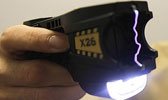
Current controversies demand scrutiny too. Tasers, promoted as life-saving alternatives to firearms, instead enable expedient avoidance of physical confrontation, with accountability evaded when victims’ conditions bear blame. Canada’s infrastructure crumbles—bridges, roads, and water systems past service life—while political deflection and misplaced priorities exacerbate the crisis. The eternal left-right divide clarifies: involuntary collectivism versus voluntary freedom, force versus persuasion.
Television offerings provide lighter escape, from the fast-paced comedy of Chuck to the moral depths of Moonlight. All these threads weave a tapestry of insight that lands just right.
Sorry, the comment form is closed at this time.