Just Right

Just Right is a weekly shortwave radio show. Hosts, Bob Metz and Robert Vaughan analyze issues from a viewpoint of individual rights, freedom, and capitalism.

035 – Scrooge was right

 Comments Off on 035 – Scrooge was right
Dec 202007
 

gift

Christmas arrives with its familiar calls for peace on Earth, selfless giving, and denunciations of commercial excess. Yet these very ideals warrant closer scrutiny.

Commercialism lies at the heart of the season’s joy. Trading goods and celebrating material abundance reflect human productivity, not greed. Pagan roots of winter festivals honor harvest and survival through reason and effort—values worth embracing openly.

Ebenezer Scrooge suffers misrepresentation as a miser. His wealth arises from honest effort, voluntary exchange, and refusal to live at others’ expense. Condemnation of him reveals envy of achievement, not moral failing. True generosity emerges from personal gain, not forced sacrifice.

Altruism promises virtue but delivers hidden costs. Mandating service to others treats individuals as means to ends, undermining genuine relationships built on mutual benefit. Even well-intended giving can humiliate recipients or mask power plays.

Peace on Earth remains elusive because rising prosperity sometimes fuels conflict, and aid can breed resentment rather than harmony. Reason, not sentiment, offers the clearest path forward.

Challenging these holiday myths while affirming life and achievement feels just right.

Transcript Donate

034 – Pope vs individual salvation

 Comments Off on 034 – Pope vs individual salvation
Dec 132007
 

car air bag

Reality anchors thinking far more securely than chasing abstract truth ever could. Philosophers from Plato onward demonstrate how easily fixed doctrines detach from evidence, producing rigid positions that ignore contradictory facts. John Macmurray’s insight captures this perfectly: real thought welcomes revision as experience demands it.

Government overreach reveals similar unreality in public debates. Taser controversies fixate on the device’s “safety” rather than proper use and policy. Car regulations escalate the pattern—bans on smoking with children, mandatory seatbelts, even airbag mandates that carry hidden lethal risks in certain crashes. Statistics show airbags save lives yet also claim others, particularly when deployed improperly. Mandating such devices overrides personal choice under the guise of protection.

Pope Benedict’s encyclical challenges modern Christianity’s emphasis on individual salvation, contrasting it with earlier communal approaches. This critique echoes collectivist themes that downplay independent reason. Hope, too, comes under scrutiny—when it substitutes for action, it paralyzes rather than empowers.

Japan’s robotics surge offers a forward-looking contrast, with Toyota and Honda developing humanoid machines for everyday assistance. These innovations highlight economic and technological shifts worth watching closely.

Exploring these intersections of philosophy, policy, and progress proves consistently illuminating and just right.

Transcript Donate

033 – Falling in love with robots?

 Comments Off on 033 – Falling in love with robots?
Nov 292007
 

Taser

Emotional bonds form between humans and machines in ways once confined to science fiction. Robotic vacuum cleaners known as Roombas now receive names, personalities, and even family-like affection from owners. Researchers add cartoon expressions to these devices, triggering reactions that blur lines between tool and companion. Consumer products gain human traits—smiling car grills or friendly cell phones—to boost sales and attachment. Such developments signal a future where robots integrate deeply into daily life, raising profound questions about humanity itself.

Scientific frontiers expand alongside these trends. Astronomers uncover a vast empty region in space, a billion light-years wide, devoid of galaxies or stars—dismissed by some as mere accident, yet challenging assumptions about cosmic order. At CERN’s Large Hadron Collider, delays mount in the quest for the Higgs boson, the so-called “God particle” that explains mass itself. Einstein’s relativity receives further confirmation through precise atomic experiments, affirming time dilation at high speeds.

Current controversies demand scrutiny too. Tasers, promoted as life-saving alternatives to firearms, instead enable expedient avoidance of physical confrontation, with accountability evaded when victims’ conditions bear blame. Canada’s infrastructure crumbles—bridges, roads, and water systems past service life—while political deflection and misplaced priorities exacerbate the crisis. The eternal left-right divide clarifies: involuntary collectivism versus voluntary freedom, force versus persuasion.

Television offerings provide lighter escape, from the fast-paced comedy of Chuck to the moral depths of Moonlight. All these threads weave a tapestry of insight that lands just right.

Transcript Donate

032 – TV Dead? Writers Strike Laughs

 Comments Off on 032 – TV Dead? Writers Strike Laughs
Nov 222007
 

television

Technology transforms how audiences experience television, yet the medium itself endures as a vital force in entertainment and ideas. Viewers now record shows on DVDs, skip commercials, and watch entire seasons at their convenience—practices that challenge old broadcast models while proving television’s adaptability. Scripted dramas and comedies face disruption from the ongoing writers’ strike, but reality programming and reruns cannot replace the depth of well-crafted stories.

Ayn Rand’s defense of television as a democratizing invention rings truer than ever, bringing drama, news, and shared cultural moments to millions. From timeless Star Trek reflections to current hits like Heroes and surprising gems like Moonlight, quality programming stimulates thought and emotion in ways passive scrolling never matches. The strike highlights tensions over digital royalties and fair compensation, raising questions about who benefits from evolving distribution.

Tune in to hear sharp insights on these shifts, from personal viewing habits to industry trends, all underscoring television’s resilience against predictions of obsolescence. Entertainment this engaging and relevant hits the mark just right.

Transcript Donate

031 – Philosophy: Who Needs It? Who Hates It? Who Cares?

 Comments Off on 031 – Philosophy: Who Needs It? Who Hates It? Who Cares?
Nov 152007
 

Ayn Rand

Philosophy remains the unseen foundation beneath every decision, conflict, and cultural trend, yet countless individuals dismiss it as abstract, irrelevant, or even dangerous. Avoidance often stems from its association with defeat—witness how athletes and politicians turn “philosophical” only after losing—or from the proliferation of destructive ideologies that overshadow the valid ones.

Origins trace back to ancient Greece, where Socrates pioneered dialectic, Plato championed timeless ideals in a dualistic reality, and Aristotle grounded forms within the material world, embracing objective existence and the golden mean. Modern thought finds its sharpest defender in Ayn Rand’s Objectivism, which elevates reason and reality above all. Her analogy of the mind as a computer proves particularly illuminating: garbage in, garbage out. Default on conscious programming, and random or alien ideas seize control, manifesting as unpredictable emotions.

Contemporary trends fare poorly under scrutiny. Pragmatism discards fixed standards for fleeting practicality. Linguistic analysis reduces truth to arbitrary words. Existentialism plunges into nihilistic despair, portraying a hostile universe devoid of purpose.

True freedom emerges not from anarchy’s chaotic faith in voluntary order—which crumbles without enforcement—but from the absence of coercion, safeguarded by objective laws and limited government. Anarchy invites gang warfare; freedom demands protection of individual rights.

These distinctions clarify why philosophy cannot be ignored—it programs the subconscious and directs human action. Approaching these ideas with reason and evidence feels just right.

Transcript Donate

30 – War Heroes Refuse to Sacrifice

 Comments Off on 30 – War Heroes Refuse to Sacrifice
Nov 082007
 

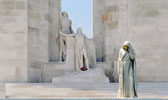
Vimy Memorial

As Remembrance Day draws near, reflection turns to the Canadians who risked everything in battle. Courage lies not in sacrifice but in the refusal to surrender life, liberty, or property to aggressors. Soldiers fight to win and survive, not to die. Their stand against force preserves freedom, distinguishing battlefield losses from everyday peacetime tragedies.

Current events and past discussions add depth. Marc Emery’s case underscores a broader fight for liberty beyond marijuana. Currency shifts show how a strong loonie pressures prices and rewards cross-border shopping, reminding everyone that real value matters. Job stress patterns confirm routine work heightens depression while choice and variety ease it.

Afghanistan reports challenge media narratives; polls reveal most Afghans welcome foreign troops and reject the Taliban. Robotics point to a future of intelligent companions and household helpers. Gun control efforts backfire, while concealed-carry laws link to falling crime rates.

Light-hearted definitions expose contradictions in political language, from bureaucracy as a perpetual inertia machine to a candidate as someone who stands for what voters will fall for.
These threads weave together insights on war, peace, and rights that feel just right.

Transcript Donate

29 – Marc Emery: Martyr to Madness?

 Comments Off on 29 – Marc Emery: Martyr to Madness?
Nov 012007
 

Marc Emery

Marc Emery’s impending extradition to the United States for selling marijuana seeds raises profound questions about sovereignty, justice, and the irrationality of drug prohibition laws. In this episode of Just Right, the discussion centers on Emery’s lifelong activism, tracing his path from a London bookseller to a political firebrand challenging censorship, taxes, and government overreach.

Emery emerges as a complex figure—abrasive yet principled, self-promoting like Muhammad Ali, but driven by a passion for individual freedom. His early debates with the host at City Lights Bookshop sparked shared ventures, including publishing newspapers like The London Tribune and The London Metro Bulletin, and co-founding the Freedom Party of Ontario in 1984. Campaigns against the 1991 Pan Am Games bid saved London taxpayers millions, while fights against Sunday shopping laws and business improvement areas demonstrated how civil disobedience can triumph over bureaucratic folly.

Clips from films like Mr. Smith Goes to Washington and documentaries such as Prince of Pot: The U.S. vs. Marc Emery illustrate Emery’s influences and current plight, where U.S. authorities target him not just for seeds, but for funding legalization efforts—a clear political vendetta. Speakers in these excerpts, including Emery himself comparing his struggle to Martin Luther King and Nelson Mandela, highlight the absurdity of facing life imprisonment in America for acts that warrant mere fines in Canada. Note that these views do not necessarily reflect those of the host or Just Right.

The episode underscores broader implications: if Canada extradites Emery, it surrenders sovereignty to insane U.S. drug policies, setting a dangerous precedent for any activist. Differences between Emery’s anarchistic leanings and the host’s perspectives add nuance, yet unity persists on core principles of liberty.

In examining Emery’s story, the pursuit of justice demands vigilance against such moral obscenities, ensuring freedoms remain just right for all.

Transcript Donate