Just Right

Just Right is a weekly shortwave radio show. Hosts, Bob Metz and Robert Vaughan analyze issues from a viewpoint of individual rights, freedom, and capitalism.

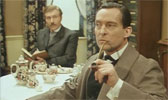
044 – Sherlock Holmes: Elementary, Symbolic, Representative…

 Comments Off on 044 – Sherlock Holmes: Elementary, Symbolic, Representative…
Mar 062008


Polls expose a curious public confusion between fact and fiction. Many in Britain insist Sherlock Holmes walked the streets of London as flesh and blood, while dismissing Winston Churchill as mere legend. Such blurring of reality and myth reveals how powerfully stories shape perception long after events fade.

We see the same dynamic play out in contemporary policy debates. Canadians celebrate an MRI scan that costs only a parking fee after seven months of waiting, as if this represents some triumph rather than a rationed system’s quiet cruelty. The satisfaction with mediocrity masks the invisible costs borne by others denied timely care.

Political figures receive similar mythic treatment. John Tory garners praise as the ideal conservative leader despite a record of equivocation and electoral failure. Talk of principles clashes with actions that mirror liberal instincts, leaving voters with no clear choice.

Meanwhile, advocates for human rights commissions invoke ‘hatred kills’ to justify speech restrictions, citing tragic cases while omitting inconvenient details like the ideological motives behind certain crimes. The impulse to control expression under the guise of protection echoes ancient myths used to maintain power.

Ideas endure far longer than the individuals or events that spawn them, whether drawn from ancient legends or modern political narratives. Distinguishing the symbolic from the factual remains essential in every age. Only in this way do we discover what is Just Right.


Transcript Donate

043 – London municipal politics: Making downtown pedestrian

 Comments Off on 043 – London municipal politics: Making downtown pedestrian
Feb 282008
 

Downtown visionaries promise to transform London’s core by banishing vehicles from Dundas Street and creating pedestrian paradises. Yet these schemes reveal not liberation but another layer of control imposed upon those who actually own and operate businesses there. Task forces and associations funded by compulsory levies dictate visions while property owners foot the bill and lose autonomy. The pattern of superseding private plans with collective mandates repeats across issues. Forced business associations extract extra taxes from owners already burdened by high rates, all while claiming to speak for the community they conscript.

The same coercion surfaces in Quebec’s language laws that criminalize unilingual signs and force bilingual packaging, perpetuating division under the guise of equity. Official bilingualism in theory grants equal status; in practice it imposes penalties on those who choose otherwise. Politicians and planners assume superior wisdom over voluntary exchange, whether reshaping streets or dictating words on private property. Even political parties blur into indistinguishable tax-and-spend options, abandoning any clear ideological anchor.

In every case, individual rights and voluntary association yield to elite direction. When the powerful elite replace personal plans with their own, freedom erodes one gradual step at a time. It all comes down to Just Right.

Transcript Donate

042 – Politics and religion: The Lord’s Prayer

 Comments Off on 042 – Politics and religion: The Lord’s Prayer
Feb 212008


Ontario politicians declare the Lord’s Prayer incompatible with modern diversity as Premier Dalton McGuinty pushes for a new inclusive custom in the legislature. Public voices push back, noting that most Ontarians across faiths accept its basic tenets while other provinces maintain their own prayer traditions. The debate exposes an obsession with race and culture that daily screams from headlines.

Parallel controversies unfold as Human Rights Commissions process complaints against Ezra Levant and Mark Steyn by Muslim leaders. One complaint drops amid public backlash, yet the pattern reveals efforts to end debate rather than engage it, especially when contrasted with bold free speech actions like Danish cartoon reprints.

At the same time Malthusian warnings of population explosion and resource scarcity crumble under evidence. Julian Simon wins his famous wager against Paul Ehrlich as selected metal prices fall despite massive population growth. David Suzuki’s calls to jail dissenting leaders echo inquisitorial tactics, while human ingenuity through technology and markets demonstrates resource abundance.

Power plays masquerade as progress in these arenas of faith, speech, and future. Staying grounded in reason and individual liberty proves Just Right.

Transcript Donate

041 – Love: Its history and philosophy

 Comments Off on 041 – Love: Its history and philosophy
Feb 142008
 

Valentine
Our philosophical journey through love reveals its ancient power as both cosmic unifier and destroyer of reason. From Hesiod’s primordial eros that unnerves gods and men to Plato’s heavenly and earthly forms, where the lover—not the beloved—gains virtue through pursuit of ideal beauty, love emerges as a force that shapes religions, institutions, and governments. Aristotle grounds it ethically and psychologically while linking it to the unmoved mover that later influences Christian concepts of divinity. Judaism and Christianity shift love from irrational passion to a voluntary attitude that can coexist with reason, yet the tension persists: emotion versus rational control.

These insights sharpen our view of today’s battles. Human Rights Commissions weaponize “hate” to silence debate, as seen in complaints against Maclean’s for publishing Mark Steyn, demanding forced publication rather than open rebuttal. City Hall pushes symbolic gestures like Earth Hour, low-flush toilets, and sustainable-energy surveys that treat conservation as virtue while ignoring the need for production, property rights, and expanded energy to meet rising demand. Sentencing inconsistencies expose a justice system more concerned with deterrence messages than individual fairness.

A listener’s thoughtful email on religion and virtue prompts reflection: morality springs from rational codes of behavior, not mere belief or professed faith, echoing Richard Dawkins’ point that religion deserves no special immunity from criticism. Comedy clips and external voices underscore the absurdities without becoming endorsements.

Reason prevails when passions earn their place and facts trump fear. That balance is Just Right.

Transcript Donate

040 – Afro-centered schools: Racism returns

 Comments Off on 040 – Afro-centered schools: Racism returns
Feb 072008
 

Racism
Canada slides ever deeper into racial tribalism. Toronto trustees revive segregated schooling under the banner of Afro-centric education while branding integration itself racist. We witness the inversion: what Martin Luther King marched against now earns applause from politicians who insist race must dictate classrooms, funding, and futures.

The same collectivist impulse drives human rights commissions. These bodies treat visible minorities as weak and inferior by design, demanding conciliation over evidence and wielding powers that eclipse ordinary courts. Their workshops list “white” and “male” as unfair advantages while vague “disadvantages” multiply, all to justify redistributing wealth and opportunity by skin colour rather than behaviour.

Freedom of speech takes fresh hits when lawyers insist private magazines must surrender space for counter-articles they dislike. The Maclean’s case exposes the fiction that anyone possesses a right to hijack another’s platform at the owner’s expense.

Philosophy cuts through the fog on abortion as well. Life begins with self-sustaining action, rights attach to action, and no one may cross the boundary of another’s body—jurisdiction settles the matter where emotion cannot.

In a world obsessed with dividing people by the irrelevant, clear thinking about individual rights and objective principles proves just right.

Transcript Donate

039 – Why Human Rights Commissions are Just Wrong!

 Comments Off on 039 – Why Human Rights Commissions are Just Wrong!
Jan 312008
 

Henry Morgentaler
Human rights commissions masquerade as protectors of equality while eroding the very freedoms they claim to uphold. Ezra Levant stands before Alberta’s commission for publishing Danish cartoons that others refused to show, and Mark Steyn confronts parallel charges across multiple provinces for reporting demographic realities about Muslim birth rates. These proceedings expose tribunals that admit hearsay, bar cross-examination, ignore intent, and treat truth itself as irrelevant. Our direct involvement representing a London landlord against coordinated complaints confirms their kangaroo-court character, where property owners and service providers surrender genuine rights to manufactured claims that pit one person’s liberty against another’s.

Canada now marks twenty years without any abortion statute after the Morgentaler ruling. Columnists clash over absolute maternal ownership versus the humanity of the unborn, yet common ground emerges when attention turns to informed consent, the rejection of taxpayer funding, and the practical nightmare of enforcing prohibitions. The real question remains who decides and what penalties would follow any law that forces one body to serve another.
Navigating these charged issues with principle and reason always lands just right.

Transcript Donate

038 – Crimes and Punishments: The rule of law?

 Comments Off on 038 – Crimes and Punishments: The rule of law?
Jan 242008
 

Scales

Contradictions plague justice as we confront the Marc Emery extradition battle, where selling marijuana seeds to consenting adults draws potential decades in American prison while co-accused face varying fates. Hypocrisy runs deep in drug prohibition, especially when medical users gain freedoms even as enforcement crushes activists.

Sentences expose deeper flaws. A remorseful first-time offender like Rob Ramage receives years for a fatal accident, yet Karla Homolka walks free after unspeakable crimes against multiple victims. Marc Emery risks severe punishment for voluntary transactions. We insist true justice demands judging the individual’s character and context, not rigid crime equivalence or message-sending.

Public ownership proves equally illusory. Activists and politicians push municipal control of utilities or public-private partnerships, but these mask force disguised as collaboration. Private property rights ground reality; government “ownership” fiction leads to arbitrary power and lost freedoms. Even personal spaces face invasion when landlords swap light bulbs under energy edicts, eroding privacy in one’s home.

Rational principles cut through these confusions, affirming individual rights over collectivist myths. Freedom emerges as the genuine common interest. It all fits together just right.

Transcript Donate