
Human Rights Commissions vs Freedom of speech

Human Rights Commissions vs Freedom of speech

Our philosophical journey through love reveals its ancient power as both cosmic unifier and destroyer of reason. From Hesiod’s primordial eros that unnerves gods and men to Plato’s heavenly and earthly forms, where the lover—not the beloved—gains virtue through pursuit of ideal beauty, love emerges as a force that shapes religions, institutions, and governments. Aristotle grounds it ethically and psychologically while linking it to the unmoved mover that later influences Christian concepts of divinity. Judaism and Christianity shift love from irrational passion to a voluntary attitude that can coexist with reason, yet the tension persists: emotion versus rational control.
These insights sharpen our view of today’s battles. Human Rights Commissions weaponize “hate” to silence debate, as seen in complaints against Maclean’s for publishing Mark Steyn, demanding forced publication rather than open rebuttal. City Hall pushes symbolic gestures like Earth Hour, low-flush toilets, and sustainable-energy surveys that treat conservation as virtue while ignoring the need for production, property rights, and expanded energy to meet rising demand. Sentencing inconsistencies expose a justice system more concerned with deterrence messages than individual fairness.
A listener’s thoughtful email on religion and virtue prompts reflection: morality springs from rational codes of behavior, not mere belief or professed faith, echoing Richard Dawkins’ point that religion deserves no special immunity from criticism. Comedy clips and external voices underscore the absurdities without becoming endorsements.
Reason prevails when passions earn their place and facts trump fear. That balance is Just Right.

Contradictions plague justice as we confront the Marc Emery extradition battle, where selling marijuana seeds to consenting adults draws potential decades in American prison while co-accused face varying fates. Hypocrisy runs deep in drug prohibition, especially when medical users gain freedoms even as enforcement crushes activists.
Sentences expose deeper flaws. A remorseful first-time offender like Rob Ramage receives years for a fatal accident, yet Karla Homolka walks free after unspeakable crimes against multiple victims. Marc Emery risks severe punishment for voluntary transactions. We insist true justice demands judging the individual’s character and context, not rigid crime equivalence or message-sending.
Public ownership proves equally illusory. Activists and politicians push municipal control of utilities or public-private partnerships, but these mask force disguised as collaboration. Private property rights ground reality; government “ownership” fiction leads to arbitrary power and lost freedoms. Even personal spaces face invasion when landlords swap light bulbs under energy edicts, eroding privacy in one’s home.
Rational principles cut through these confusions, affirming individual rights over collectivist myths. Freedom emerges as the genuine common interest. It all fits together just right.

Media distortions demand our scrutiny, particularly when a London Free Press headline touts a teen activist’s dedication to peace while the story reveals a campaign against military recruitment lacking balance or substance. Such coverage polarizes falsely, conceals counterarguments, and leaves readers chasing details online.
Marc Emery’s defiance against prohibition laws grips our attention amid his tentative plea with American authorities. Karen Selick analyzes the pressures, jurisdictional puzzles, and his targeting for effective activism rather than mere commerce. His candor stands in stark contrast to the underground trade, raising questions of political persecution and heroic resolve in challenging state power.
Critics assail the new atheism of figures like Richard Dawkins as intellectual totalitarianism, yet overlook how books advance ideas through persuasion alone. Surveys claiming believers embrace virtues more deeply invite examination, for many qualities listed represent values or even potential vices absent true moral anchors like justice and reason. Atheism signals absence, not dogma, underscoring rationality’s role.
These explorations of media, activism, faith and morality expose vital tensions in liberty and thought that strike just right.

Christmas arrives with its familiar calls for peace on Earth, selfless giving, and denunciations of commercial excess. Yet these very ideals warrant closer scrutiny.
Commercialism lies at the heart of the season’s joy. Trading goods and celebrating material abundance reflect human productivity, not greed. Pagan roots of winter festivals honor harvest and survival through reason and effort—values worth embracing openly.
Ebenezer Scrooge suffers misrepresentation as a miser. His wealth arises from honest effort, voluntary exchange, and refusal to live at others’ expense. Condemnation of him reveals envy of achievement, not moral failing. True generosity emerges from personal gain, not forced sacrifice.
Altruism promises virtue but delivers hidden costs. Mandating service to others treats individuals as means to ends, undermining genuine relationships built on mutual benefit. Even well-intended giving can humiliate recipients or mask power plays.
Peace on Earth remains elusive because rising prosperity sometimes fuels conflict, and aid can breed resentment rather than harmony. Reason, not sentiment, offers the clearest path forward.
Challenging these holiday myths while affirming life and achievement feels just right.
Reality anchors thinking far more securely than chasing abstract truth ever could. Philosophers from Plato onward demonstrate how easily fixed doctrines detach from evidence, producing rigid positions that ignore contradictory facts. John Macmurray’s insight captures this perfectly: real thought welcomes revision as experience demands it.
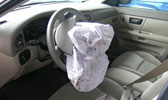
Government overreach reveals similar unreality in public debates. Taser controversies fixate on the device’s “safety” rather than proper use and policy. Car regulations escalate the pattern—bans on smoking with children, mandatory seatbelts, even airbag mandates that carry hidden lethal risks in certain crashes. Statistics show airbags save lives yet also claim others, particularly when deployed improperly. Mandating such devices overrides personal choice under the guise of protection.
Pope Benedict’s encyclical challenges modern Christianity’s emphasis on individual salvation, contrasting it with earlier communal approaches. This critique echoes collectivist themes that downplay independent reason. Hope, too, comes under scrutiny—when it substitutes for action, it paralyzes rather than empowers.
Japan’s robotics surge offers a forward-looking contrast, with Toyota and Honda developing humanoid machines for everyday assistance. These innovations highlight economic and technological shifts worth watching closely.
Exploring these intersections of philosophy, policy, and progress proves consistently illuminating and just right.

Emotional bonds form between humans and machines in ways once confined to science fiction. Robotic vacuum cleaners known as Roombas now receive names, personalities, and even family-like affection from owners. Researchers add cartoon expressions to these devices, triggering reactions that blur lines between tool and companion. Consumer products gain human traits—smiling car grills or friendly cell phones—to boost sales and attachment. Such developments signal a future where robots integrate deeply into daily life, raising profound questions about humanity itself.
Scientific frontiers expand alongside these trends. Astronomers uncover a vast empty region in space, a billion light-years wide, devoid of galaxies or stars—dismissed by some as mere accident, yet challenging assumptions about cosmic order. At CERN’s Large Hadron Collider, delays mount in the quest for the Higgs boson, the so-called “God particle” that explains mass itself. Einstein’s relativity receives further confirmation through precise atomic experiments, affirming time dilation at high speeds.
Current controversies demand scrutiny too. Tasers, promoted as life-saving alternatives to firearms, instead enable expedient avoidance of physical confrontation, with accountability evaded when victims’ conditions bear blame. Canada’s infrastructure crumbles—bridges, roads, and water systems past service life—while political deflection and misplaced priorities exacerbate the crisis. The eternal left-right divide clarifies: involuntary collectivism versus voluntary freedom, force versus persuasion.
Television offerings provide lighter escape, from the fast-paced comedy of Chuck to the moral depths of Moonlight. All these threads weave a tapestry of insight that lands just right.