021 – Star Trek New Voyages / Fascism and frogs

 Comments Off on 021 – Star Trek New Voyages / Fascism and frogs
Sep 062007
 

Star Trek

In today’s episode of Just Right, the airwaves crackle with critiques of Canadian politics, drawing from Andrew Coyne’s blunt assessment in the National Post that our federal and provincial scenes embody sheer vacuity—Liberals peddling unattainable environmental targets and Conservatives abandoning policy altogether. Provincial elections in Ontario loom as tedious non-events, riddled with broken promises and regional squabbles, while energy debates expose the nonsense of conservation fantasies versus nuclear sense, as David Frum highlights the waste in deferring to ignorant fears.

The discussion shifts to the enduring allure of Star Trek, where amateur productions at newvoyages.com revive the original series with superior effects but amateur acting, featuring veterans like Walter Koenig. Beyond gadgets, Star Trek serves as a moral barometer, exploring philosophy through dramatic devices like the prime directive—echoing laissez-faire non-interference—and tackling racism, individual rights, and human nature in ways realism cannot.

Building on last week’s socialism segment, fascism emerges as the flip side, illustrated by the frog parable: gradual heat increases unnoticed until boiling, mirroring Ontario’s creeping state controls over private property, from smoking bans to rent controls and pay equity laws. These policies, though labeled liberal or conservative, embody fascist doctrine where control equals ownership, eroding freedoms without outright nationalization.

Finally, Victor Davis Hanson’s call to study war underscores its utilitarian role in ending tyrannies, while Ayn Rand pins wars on statism’s institutionalized violence, contrasting with capitalism’s historic peace from 1815 to 1914. As pressures mount in our mixed economy, recognizing these dynamics keeps perspectives just right.


Transcript Donate

020 – Health care? / Hitler was a socialist

 Comments Off on 020 – Health care? / Hitler was a socialist
Aug 302007
 

Machine that goes Bing! 

Continuing our critique of Canada’s socialized health care system, we feature compelling insights from Dr. Tom Dorman, a physician who fled both the British and Canadian systems. Dorman rightly defines true insurance as voluntary asset protection against catastrophe—not the compulsory, taxpayer-funded scheme masquerading as “health insurance” today. Mandatory coverage, he argues, reduces patients to mere chattels, valued only until treatment becomes uneconomical, much like cattle on a farm.

The incoming CMA president, Brian Day, claims to inject “market principles” into the public system while insisting full privatization is impossible. This contradiction exposes a deeper flaw: genuine markets thrive on voluntary exchange, not coerced taxation. Day’s approach merely rearranges the deck chairs on a sinking collectivist ship.

Shifting to another form of taxpayer plunder, arts organizations lobby politicians for forced funding, equating their subsidies to health care entitlements. John Tory enthusiastically obliges, promising multi-year commitments and councils to “nourish” culture. Yet culture flourishes through voluntary support, not government coercion. The Freedom Party correctly condemns this as morally repugnant—theft disguised as benevolence.

Finally, we examine Nazism’s collectivist roots. Adolf Hitler’s regime built a popular welfare state financed by plundering Jews and conquered nations. The National Socialist German Workers’ Party delivered “benefits” through altruism and sacrifice for the collective—principles echoing modern statism. Hitler’s vaunted Aryan superiority rested not on intellect or strength, but on willingness to self-sacrifice for the community.

Recognizing collectivism’s destructive patterns in health care, arts funding, and historical tyranny offers the perspective that is just right.

Transcript Donate

017 – Robots Rising: Sentient or Soulless?

 Comments Off on 017 – Robots Rising: Sentient or Soulless?
Aug 092007
 

Robbie the robot

Safety concerns already dominate discussions. Reports cite dozens of robot-related accidents in Britain alone, from crushings to molten aluminum spills. Japan’s guidelines demand sensors, soft materials, and emergency shut-offs, while experts debate liability when autonomous robots learn unpredictably. Isaac Asimov’s famous Three Laws of Robotics sound logical—protect humans, obey orders, preserve self—but prove riddled with unintended consequences, as Asimov himself demonstrated in his stories.

Deeper questions arise about sentience and morality. Programming right and wrong into silicon minds challenges metaphysics: can machines ever possess true choice, or do they merely execute predetermined instructions? Ethics symposiums tackle unsettling issues, from robots strong enough to crush owners to the imminent arrival of sex robots.

Local politics mirrors these themes. Debates at London City Hall over industrial development reveal a socialist resistance to market-driven growth, even when projects involve high-tech robotics. Labels like “socialist cabal” spark outrage, yet the contrast remains clear: government control versus individual management, coercion versus voluntary exchange. Socialism relies on force to achieve its ends, while true management thrives only in freedom.

Philosophy underpins it all—metaphysics, epistemology, and morality guide whether technology serves good or evil. The choice belongs solely to creators and users.

Recognizing these polarities in technology and politics proves just right.

Transcript Donate

015 – Sweden: Socialist Paradise or Illusion? | Paul Lambert

 Comments Off on 015 – Sweden: Socialist Paradise or Illusion? | Paul Lambert
Jul 262007
 

Paul Lambert

Paul Lambert, Just Right’s Euro-correspondent and a native Londoner who has lived and worked in Sweden for years, joins us for a candid conversation that challenges popular myths about the so-called socialist paradise. Statistics often paint Sweden as prosperous, with higher per capita income than Canada, yet Paul reveals a different reality shaped by crushing taxes, limited choices, and everyday frustrations.

High fuel prices barely spark debate there, while costs for goods and services drain incomes far more than numbers suggest. Shoppers encounter abrupt service, a stark contrast to the helpful attitudes Paul encounters back in Canada. Even driving feels polite and patient here compared to the norm abroad.

In schools, discipline has eroded to the point where disruptive students challenge teachers without consequence, turning education into bureaucracy rather than learning. Socialized dentistry and healthcare, often praised as models, prove prohibitively expensive or inaccessible for average citizens—Paul flies to Canada for cheaper appointments. Inequalities persist, with quality care reserved for the wealthy or foreigners, while taxes subsidize a system that delivers long waits and uneven results.

Crime has escalated, work ethic has declined, and cultural cynicism resists innovation. Immigration strains resources, yet open discussion remains taboo. Sweden drifts from the high-tax welfare state many admire, exposing the gaps between ideology and lived experience.

Contrasts like these remind us why individual freedom and responsibility matter—and why the right balance in society is just right.

Transcript Clips & Credits Donate

008 – Ontario election / G8 Summit / Health care / Wealth and poverty

 Comments Off on 008 – Ontario election / G8 Summit / Health care / Wealth and poverty
Jun 072007
 

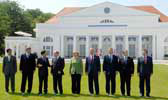
G8 Summit


We observe once again how the political landscape in Ontario offers voters little more than a choice among varying degrees of statism, as the unofficial election campaign begins with Dalton McGuinty proroguing the legislature early. Parties compete not on principles of individual freedom, but on promises to expand government control over our lives and wallets—outbidding each other on subsidies, environmental mandates, and monopolies in essential services.

We note the irony: it is often the so-called conservatives who enact the most enduring leftist policies, from income taxes to health care monopolies and rent controls. True freedom requires protecting both personal and economic rights, yet no major party advocates this consistent principle. Instead, we see pragmatists in power pursuing control for its own sake, while restricting freedoms leads inevitably to less prosperity and greater tyranny.

Globalism, properly understood, means voluntary cooperation and free trade among nations, not centralized control or anti-capitalist protests at summits like the ongoing G8. Health care remains a sacred cow of statism: a government monopoly that rations care, drives patients abroad, and bans private alternatives—unique to Ontario among Western jurisdictions. Choice and competition, not compulsion, would ensure better access and quality for all.

Finally, the perennial envy of wealth ignores how capitalism creates abundance for everyone, while socialism merely redistributes poverty. The rich deserve their earnings when gained through voluntary trade, not confiscation. In all these issues, the solution remains the recognition of individual rights and free markets—just right.

Transcript Donate